
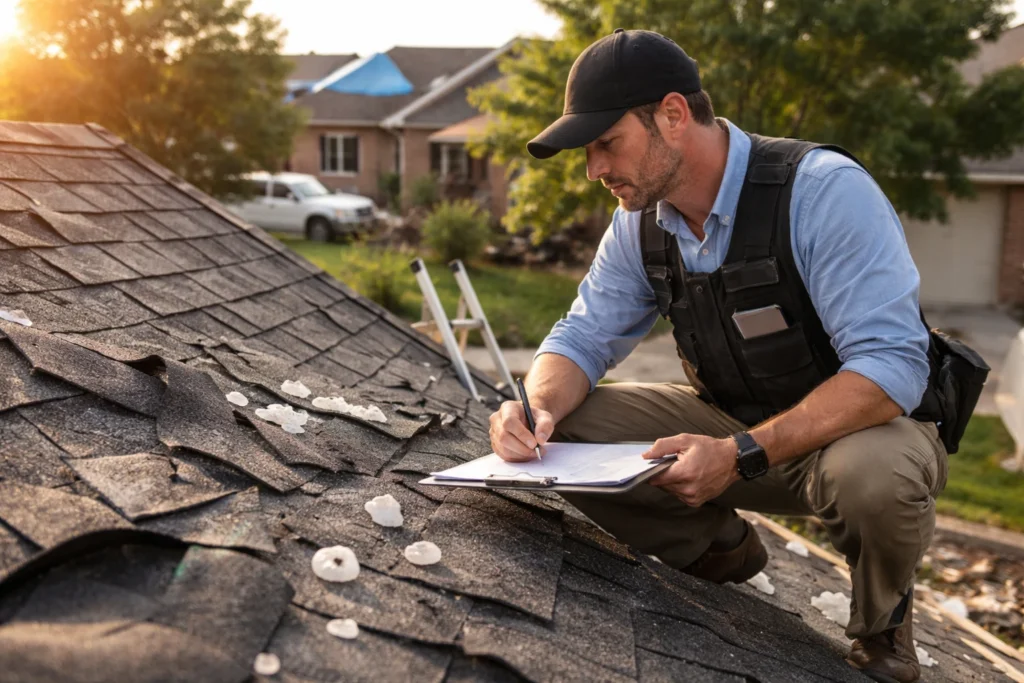
A storm rolls through Hutto at 2:00 a.m. The wind howls. Hail pounds your roof. By morning, water stains creep across the ceiling and shingles litter your yard. You call your insurance company. An adjuster comes out. Weeks later, you receive an estimate that feels… light.
Now you’re wondering when to hire a public adjuster — and whether you’ve already waited too long.
If you own property in Hutto, Texas, this question isn’t theoretical. Central Texas weather is aggressive. Hailstorms, wind-driven rain, freeze events, plumbing failures — they happen. And when they do, the difference between a rushed claim and a properly prepared one can mean tens of thousands of dollars.
Let’s walk through exactly when to hire a public adjuster, what they do, what it costs, and how timing affects your outcome.
What a Public Adjuster Actually Does
Before deciding when to hire a public adjuster, you need clarity on the role.
A public adjuster is a licensed insurance professional who represents you, not the insurance company. Their job is to prepare, document, and negotiate your property claim to ensure the settlement reflects the full scope of covered damage.
That includes:
- Reviewing your insurance policy line by line
- Conducting a comprehensive damage inspection
- Preparing detailed repair estimates
- Documenting hidden and secondary damage
- Negotiating with the insurance carrier
- Filing supplements if additional damage is discovered
Here’s how that compares to other adjusters:
| Type of Adjuster | Who They Work For | Who They Represent | Primary Objective |
| Company Adjuster | Insurance company | Insurance company | Protect carrier interests |
| Independent Adjuster | Contracted by insurance | Insurance company | Follow carrier guidelines |
| Public Adjuster | Policyholder | You | Maximize legitimate settlement |
The distinction matters. A lot.
When to Hire a Public Adjuster After Major Storm Damage
Hutto sits in the path of frequent hail activity. Williamson County sees significant wind and impact damage year after year. After a major storm, inspections happen fast. Sometimes too fast.
This is one of the clearest moments when to hire a public adjuster.
Why?
Because storm damage is rarely limited to what’s obvious. Missing shingles are visible. But what about:
- Lifted flashing
- Compromised underlayment
- Impact fractures
- Softened decking
- Interior moisture migration
- Code-required upgrades
A surface-level inspection can miss thousands of dollars in legitimate repair scope.
If your property has sustained roof, siding, window, or interior water damage after a severe storm, that’s a strong signal. Especially if the initial estimate feels incomplete.
When the Insurance Offer Feels Too Low
Trust your instincts.
If the number doesn’t align with contractor bids, something is off.
One of the most common reasons homeowners start researching when to hire a public adjuster is sticker shock — in reverse. The insurance estimate is far below what local contractors are quoting.
Red flags include:
- Missing line items
- Outdated pricing
- No code upgrades
- Limited interior paint allowances
- Ignored overhead and profit
- Excluded secondary damage
Let’s look at a simplified example:
| Category | Insurance Initial Offer | After Public Adjuster Review |
| Roofing | $14,200 | $26,800 |
| Interior Repairs | $4,900 | $12,600 |
| Code Upgrades | $0 | $7,400 |
| Total | $19,100 | $46,800 |
That gap isn’t unusual in complex claims.
When the scope feels thin or rushed, that’s often when to hire a public adjuster.
When Your Claim Is Delayed or Stalling
Silence is expensive.
If weeks pass without meaningful updates…
If inspections are repeated…
And if paperwork keeps getting “reviewed”…
You may be dealing with claim friction.
In high-volume storm seasons, carriers face backlogs. Adjusters rotate. Files transfer. Documentation gets lost. The longer a claim drags, the harder it can become to keep momentum.
This is another practical moment when to hire a public adjuster. A licensed representative applies structure to the process. Deadlines tighten. Communication formalizes. Documentation becomes organized and comprehensive.
Movement resumes.
When Your Claim Is Denied
Denials happen. Sometimes legitimately. Sometimes incorrectly.
Partial denials are especially common — where portions of the damage are excluded or attributed to wear and tear.
Before accepting that outcome, step back.
Ask:
- Was the full damage evaluated?
- Was causation analyzed thoroughly?
- Does the denial cite specific policy language?
- Was all evidence considered?
If your claim is denied and you believe the decision is flawed, that’s a critical time when to hire a public adjuster. They can re-evaluate the damage, review the policy, and challenge the determination with structured documentation.
Many denied claims are reopened. But timing matters.
When You Don’t Have Time to Manage the Process
Insurance claims require coordination. Inspections. Contractor meetings. Paperwork. Phone calls. Documentation. Follow-ups.
If you’re:
- Running a business
- Managing rental properties
- Working full-time
- Handling family responsibilities
You may not have the bandwidth.
And here’s the reality: under-managed claims often underperform financially.
Another practical scenario when to hire a public adjuster is when time constraints prevent you from advocating properly. Delegating the claim doesn’t mean disengaging. It means protecting your time and your property.
When Damage Is Complex or Hidden
Some damage hides behind walls. Under floors. Inside systems.
Examples:
- Plumbing leaks behind cabinetry
- Mold growth following slow water intrusion
- Foundation shifts after soil movement
- Freeze-related pipe bursts
- Electrical issues tied to water exposure
These are not simple claims. They require layered documentation.
If your loss involves structural, mechanical, or hidden components, that’s often when to hire a public adjuster early — before incomplete scoping locks in a lower baseline.
Once a claim is paid and closed, reopening can become harder.
Before Filing a Large Commercial Claim
Commercial claims introduce complexity fast.
You’re not just documenting physical damage. You’re calculating:
- Business interruption
- Inventory loss
- Equipment replacement
- Lease obligations
- Payroll continuation
- Code compliance upgrades
Financial documentation must align precisely with policy language.
If you own a commercial building in Hutto or operate a business affected by property damage, this is absolutely when to hire a public adjuster at the beginning — not midstream.
Preparation drives outcomes.
When You May Not Need a Public Adjuster
Let’s be honest.
Not every claim requires one.
If:
- Damage is minor
- The claim is below or barely above deductible
- The carrier responds quickly
- The settlement aligns with contractor bids
You may not need additional representation.
Understanding when to hire a public adjuster also means understanding when it’s unnecessary. That builds credibility.
How Much Does It Cost in Texas?
In Texas, public adjusters typically work on a contingency fee. That means:
- No upfront fees
- No hourly billing
- Payment is a percentage of the settlement
The typical range falls between 5% and 10%, depending on claim size and complexity.
So is it worth it?
If an adjuster increases a $20,000 offer to $45,000, even after fees, the net recovery can still be substantially higher than handling it alone.
Timing influences value. Hiring early often yields stronger results than bringing someone in after documentation gaps form.
Why Timing Matters in Hutto
Texas policies have reporting deadlines. Some policies impose:
- Prompt notice requirements
- Supplemental claim deadlines
- Statute of limitations windows
Additionally, after major hail events in Williamson County, claim volume surges. Inspections become shorter. Estimates become templated.
Local knowledge matters here. Understanding:
- Regional contractor pricing
- Texas building codes
- Impact resistance standards
- Freeze vulnerability
That local context affects claim scope.
This is why knowing when to hire a public adjuster in Hutto specifically can be a strategic move, not just a reactive one.
What Changes After You Hire One?
The process becomes structured.
Typical timeline:
- Comprehensive property inspection
- Policy analysis
- Detailed estimate preparation
- Photographic and moisture documentation
- Negotiation submission
- Carrier review and response
- Supplemental claims if needed
Instead of reacting to carrier estimates, you present a complete package from the start.
That shifts leverage.
Signs You Should Call Immediately
There are moments when hesitation costs money.
Call right away if:
- You feel pressured to settle quickly
- The inspection lasted less than 20 minutes
- The estimate ignores visible damage
- You’re asked to sign documents you don’t understand
- Your contractor’s bid is double the insurance estimate
- The claim is denied without detailed explanation
These are strong indicators of when to hire a public adjuster without delay.
Case Study: Hutto Hailstorm
A homeowner in Hutto experienced a spring hailstorm. The initial insurance estimate came in at $18,700.
Roof replacement was partially approved. No decking. No ventilation upgrades. Interior staining excluded.
A comprehensive re-inspection identified:
- Additional slope damage
- Softened decking
- Code-required drip edge upgrades
- Full interior paint blending
- Flashing replacement
After negotiation and supplements, the final settlement reached $44,900.
The difference wasn’t exaggeration. It was documentation.
And documentation begins with knowing when to hire a public adjuster.
Common Myths
“It will slow down my claim.”
Organized claims often move faster.
“Insurance will cancel me.”
Representation is a legal right.
“It’s only for commercial buildings.”
Residential claims frequently benefit.
“It’s too expensive.”
Underpaid claims are more expensive.
Final Thoughts: Protecting Your Investment
Property ownership in Hutto isn’t passive. It’s an investment. A long-term asset. Sometimes a business. Sometimes a family home.
Insurance exists to protect that asset. But insurance is a contract. And contracts require interpretation.
Understanding when to hire a public adjuster is about timing. Not panic. Not conflict. Strategy.
After major storm damage.
When an offer feels low.
When a claim stalls.
And when damage is complex.
When denial feels wrong.
Those are the moments.
If you’re unsure, consult early. A conversation costs little. Waiting can cost a lot.
And when the next Central Texas storm rolls through, you’ll know exactly what to do — and when to do it.
FAQs
You should consider hiring one after major damage, a low settlement offer, a delayed claim, or a denial you believe is incorrect.
Not usually. Minor claims that are handled quickly and fairly may not require additional representation.
Most work on a contingency fee, typically 5%–10% of the final settlement, with no upfront payment.
In many cases, it helps organize and strengthen the claim, which can actually move the process forward.
Yes, if new evidence or overlooked damage is identified, they can help request a reconsideration.
No. They represent the policyholder, not the insurance carrier.
Large storm losses, water damage, fire damage, commercial claims, and complex structural issues often benefit the most.
Yes. You can bring one in during the process or even after an initial offer has been made.
Yes. Public adjusters must be licensed by the state of Texas and are legally allowed to represent policyholders.
You have the legal right to representation, and carriers are required to handle your claim according to policy terms.