
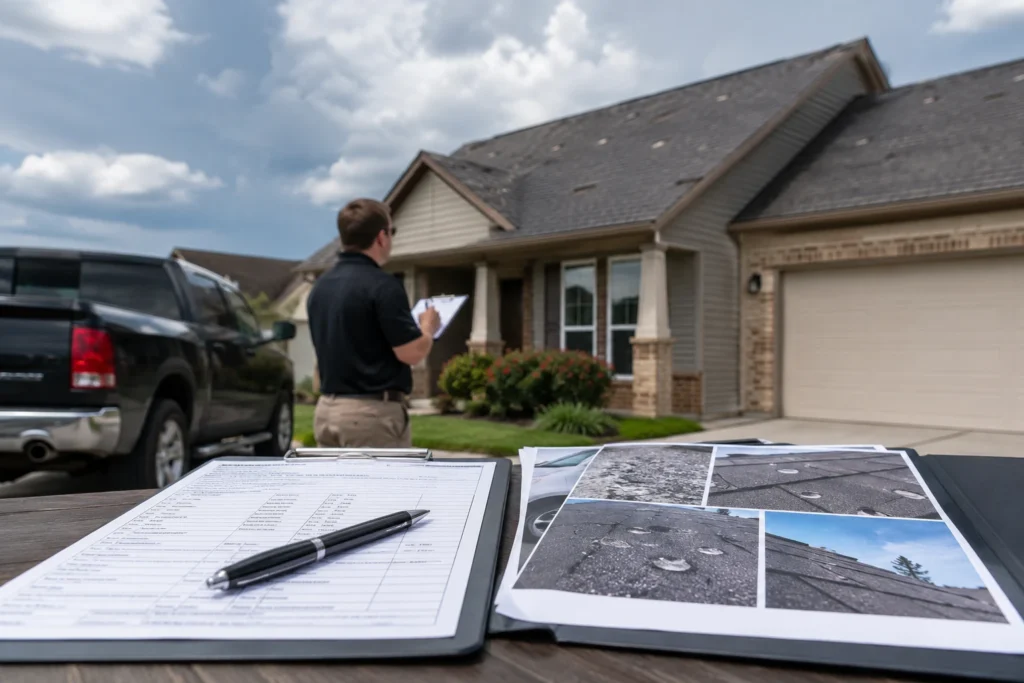
Heavy hail can turn a calm afternoon into an expensive property loss within minutes. Shingles crack, metal panels dent, gutters buckle, and water may begin entering places you cannot see. Understanding heavy hail roof damage insurance gives you a stronger starting point when the storm passes and the paperwork begins. For property owners in Hutto, hail is more than a seasonal inconvenience. A single storm can affect entire neighborhoods, overwhelm roofing contractors, and create a rush of insurance claims at the same time. Acting promptly matters, but acting carefully matters even more. The claim process can feel especially confusing when you are dealing with roofers, insurance representatives, estimates, deductibles, and repair decisions all at once. Understanding How a Fire Insurance Adjuster Helps You can also provide useful insight into how property claims are documented, reviewed, and negotiated after a major loss.
Some hail damage is obvious. You may see broken shingles on the ground, dents in gutters, cracked skylights, or pieces of roofing material scattered across the yard. These signs deserve immediate attention because they may indicate widespread impact across the roof. Other damage hides in plain sight. A shingle can look intact from the driveway while the fiberglass mat underneath is fractured. A metal roof may have dents that appear cosmetic but place stress on seams, coatings, or fasteners. Likewise, a tile may contain a hairline crack that expands after repeated rain and temperature changes. Roofing material plays a major role in how hail damage appears. Asphalt shingles often lose protective granules. Metal panels may dent or crease. Clay and concrete tiles can crack at corners or beneath overlapping sections. Commercial membranes may develop punctures that remain unnoticed until moisture reaches the insulation. Homeowners insurance often covers hail damage because hail is commonly treated as a covered cause of loss. Still, coverage is never automatic. Your policy language, endorsements, deductible, roof age, maintenance history, and the insurer’s findings can all influence the final decision.
That distinction is important. Two neighboring properties can experience the same storm and receive very different claim outcomes because their policies contain different deductibles, exclusions, valuation methods, or roof-payment schedules. Before assuming what your policy covers, read the declarations page and the sections addressing wind, hail, roof surfaces, exclusions, and loss settlement. The deductible also deserves close attention. Some policies use a fixed amount, such as $2,500. Others apply a percentage based on the insured value of the property. A 2% deductible on a home insured for $400,000 equals $8,000, regardless of the actual repair cost. Safety comes first after any major storm. Do not climb onto a wet, steep, or visibly damaged roof. Loose shingles, cracked tiles, sharp metal, unstable decking, and hidden electrical hazards can turn an inspection into an emergency.
Instead, document what you can safely see from the ground. Take wide photographs of every roof slope, then capture close images of gutters, downspouts, siding, window screens, vents, fences, air-conditioning units, and debris. Photograph hailstones beside a ruler or common object when it is safe to do so. Weather analysis may later help support the reported storm date and intensity. Instruments used in anemometry, the measurement of wind speed and direction, can contribute to weather data that helps establish how severe conditions were in a specific area.
What Heavy Hail Damage Actually Looks Like
Hail damage does not have one universal appearance. Its severity depends on several factors working together:
- Hailstone size and density
- Wind speed and direction
- Duration of the storm
- Roof slope and orientation
- Roofing material
- Roof age and condition
- Nearby trees or structures
- Previous repairs or damage
A soft, slushy hailstone may cause limited damage even when it is fairly large. A smaller but dense hailstone driven by high winds can hit the roof with enough force to fracture shingles, split tiles, or deform metal components. That is why hailstone size alone does not settle the question. The angle and force of impact matter too.
Asphalt Shingle Damage
Asphalt shingles are designed with a protective layer of mineral granules. These granules shield the asphalt from ultraviolet exposure and help the shingle resist weathering. Heavy hail may knock granules loose, leaving dark impact marks or exposed asphalt. More severe impacts can bruise the shingle, fracture the fiberglass reinforcement, or break the seal between overlapping courses.
Common indicators include:
- Circular areas of granule loss
- Soft spots that feel bruised
- Cracks through the shingle surface
- Exposed fiberglass matting
- Broken or lifted edges
- Damaged ridge-cap shingles
Granule loss should be evaluated in context. Normal aging also releases granules, especially near gutters and downspouts. Storm-related damage usually appears as concentrated impact marks rather than uniform surface wear.
Metal Roof Damage
Metal roofing can survive severe weather, but it is not immune to hail.
Large stones can dent exposed panels, damage protective coatings, deform seams, loosen fasteners, or affect flashing around penetrations. Some dents may be primarily cosmetic. Others can interfere with water shedding, panel movement, drainage, or the manufacturer’s warranty.
Look closely at:
- Panel seams
- Fastener heads
- Ridge caps
- Valleys
- Flashing
- Vent covers
- Coating fractures
- Drainage areas
The disagreement often centers on whether the damage affects appearance only or also changes the roof’s performance. That question may require input from an experienced roofing consultant, engineer, or manufacturer.
Tile Roof Damage
Clay, concrete, and synthetic tiles can crack under direct hail impact. However, the damage may be difficult to see from the ground. Tiles often break along corners, edges, or unsupported sections. Some cracks are hidden beneath overlapping courses. Walking on the roof without proper training can create additional breakage, which makes professional inspection especially important. A tile roof inspection should distinguish hail impacts from foot traffic, installation damage, manufacturing defects, and ordinary aging.
Flat and Commercial Roof Damage
Commercial roofing systems present their own challenges. Hail can puncture or bruise single-ply membranes, damage modified bitumen, crush insulation, deform metal edging, and harm rooftop equipment. Even when the surface remains intact, the insulation beneath it may be compressed. Trapped moisture can then spread horizontally through the roofing assembly. By the time an interior leak appears, the affected area may be much larger than the original entry point.
Does Insurance Cover Heavy Hail Roof Damage?
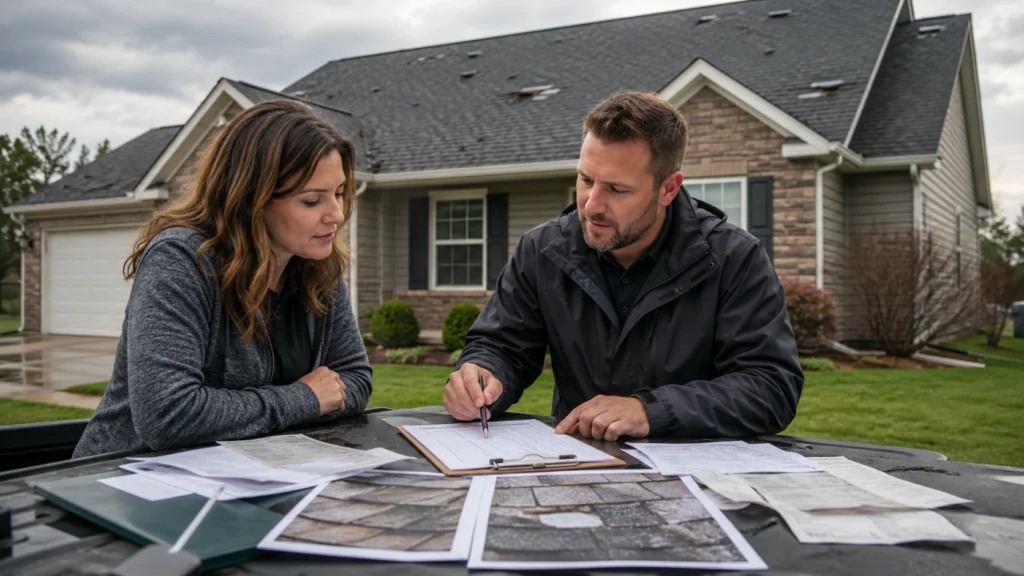
In many policies, yes. However, the answer depends on the contract. A heavy hail roof damage insurance claim generally begins with one central question: Did a covered hail event cause direct physical damage during the policy period?
The insurer may review:
- The reported date of loss
- Local weather records
- Roof age
- Maintenance records
- Prior claims
- Previous photographs
- Inspection findings
- Repair history
- Policy exclusions
- Applicable endorsements
Coverage may be limited when the insurer concludes that the roof’s condition resulted from wear, deterioration, faulty installation, neglect, or an earlier event rather than the reported storm. This does not mean an older roof cannot suffer covered hail damage. It can. The challenge is separating new storm damage from long-term aging.
Replacement Cost and Actual Cash Value
The settlement method can significantly affect the first payment.
| Valuation Method | How It Generally Works | Possible Effect |
| Replacement Cost Value | Estimates the cost to replace damaged property with comparable materials | May allow recovery without permanent depreciation, subject to policy terms |
| Actual Cash Value | Replacement cost minus depreciation | Initial or final payment may be substantially lower |
| Roof Payment Schedule | Pays according to roof age and material | Older roofs may receive a reduced percentage |
| Functional Repair Basis | Pays for repairs intended to restore function | May not cover full matching or replacement |
Some replacement cost policies issue payment in stages. The insurer may first pay the actual cash value. Recoverable depreciation may be released after repairs are completed and supporting invoices are submitted. Deadlines matter here. Policies may require repairs to be completed or depreciation documentation to be submitted within a specific period.
Understanding Wind and Hail Deductibles
A deductible is the portion of the covered loss the policyholder is responsible for paying. Suppose a property has an insured value of $450,000 and a 2% wind-and-hail deductible:
| Calculation | Amount |
| Insured value | $450,000 |
| Deductible percentage | 2% |
| Policyholder deductible | $9,000 |
If the covered repair estimate is $28,000, the deductible is subtracted from the claim amount. It is not calculated as 2% of the repair estimate.
This surprises many property owners.
Review the declarations page before filing so you understand the financial threshold. However, do not assume a high deductible makes documentation unnecessary. Damage should still be evaluated because hidden problems may worsen, and delayed reporting can create additional claim challenges.
What to Do Immediately After a Hailstorm
The first few hours and days can shape the entire claim.
Protect People First
Keep family members, tenants, employees, and pets away from broken glass, fallen branches, loose roofing materials, and damaged electrical equipment. Avoid entering rooms with sagging ceilings. Water trapped above drywall can cause sections to collapse without warning.
Photograph the Entire Property
Do not focus only on the roof. Hail often leaves a pattern across several exterior surfaces. Dents in gutters, vents, downspouts, fences, siding, window screens, vehicles, and outdoor equipment may help demonstrate the storm’s direction and intensity.
Take photographs from multiple distances:
- A wide image showing the entire damaged area
- A medium image showing location and context
- A close image showing the specific impact
- An image with a ruler or reference object when appropriate
Keep the original files. They contain date and location information that may be useful later.
Record the Timeline
Write down:
- When the storm began
- When the largest hail occurred
- When the damage was discovered
- When temporary repairs were completed
- When the insurer was notified
- Who inspected the property
- What each person observed
Do this while the details are fresh.
Prevent Additional Damage
Most policies require reasonable steps to protect the property after a loss. That may include tarping an exposed area, removing standing water, boarding a broken window, moving belongings away from leaks, or using fans and dehumidifiers.
Save every receipt. Temporary repairs should protect the property without destroying evidence. Photograph the area before work begins, during the repair, and after completion. When damaged materials must be removed, keep samples when practical.
Filing a Heavy Hail Roof Damage Insurance Claim
Once the property is safe and documented, notify the insurance company. Provide accurate information. Do not exaggerate the damage, guess at uncertain details, or claim that every roof problem came from hail. Clear, factual reporting builds credibility.
Ask for:
- The claim number
- The assigned adjuster’s contact information
- Inspection expectations
- Required forms
- Document submission instructions
- Applicable deadlines
- A copy of the relevant policy if you do not have one
Maintain a claim folder containing photographs, estimates, receipts, letters, emails, reports, and notes from telephone calls.
After every important phone conversation, send a brief written summary. For example:
“Thank you for speaking with me today. My understanding is that the roof inspection is scheduled for August 12 and that I should submit the contractor’s estimate through the claim portal.”
That simple habit creates a reliable communication record.
Preparing for the Insurance Inspection
The insurance adjuster will usually examine the roof and related property damage. The inspection may include photographs, measurements, test squares, interior observations, and review of exterior components. Whenever possible, arrange for your roofing contractor or representative to attend.
Before the inspection:
- Clear access to the attic
- Identify interior stains or leaks
- Gather pre-storm photographs
- Prepare contractor reports
- Organize temporary repair receipts
- Make a written list of damaged areas
- Confirm that every roof slope can be accessed safely
Do not assume the adjuster will automatically find everything. Point out damage without directing the conclusion. Statements such as “Water began appearing in this room after the storm” are more useful than declaring that the entire roof must be replaced before the inspection is complete.
Why Hail Claims Are Underpaid
An insurance company may accept coverage but still estimate less than the actual repair cost. That is a valuation or scope dispute.
Common omissions include:
- One or more roof slopes
- Ridge caps and starter shingles
- Underlayment
- Ice or water barriers where required
- Drip edge
- Flashing
- Pipe boots
- Roof vents
- Gutters and downspouts
- Skylight components
- Steep-roof labor
- High-roof access
- Debris removal
- Permit fees
- Sales tax
- Interior repairs
Pricing can also differ. An estimate may rely on general market data while a contractor’s estimate reflects current labor shortages, material availability, complex access, or local code requirements. Compare the estimates line by line rather than comparing only the totals.
Repair Versus Full Roof Replacement
Not every hail-damaged roof requires full replacement. Some can be repaired effectively.
However, replacement may become reasonable when damage is widespread, repairs cannot be completed without damaging surrounding materials, matching products are unavailable, or the roof system cannot be restored to a reasonably uniform and functional condition.
Important questions include:
- How many slopes contain confirmed damage?
- Are damaged shingles scattered or concentrated?
- Can individual shingles be removed without tearing adjacent shingles?
- Is the same product still manufactured?
- Will replacement materials match in size, profile, thickness, and color?
- Would repairs affect an existing warranty?
- Does the damage involve essential seams, flashings, or underlayment?
A contractor should explain why a repair will or will not work. “The roof needs replacement” is not enough. A stronger opinion includes photographs, testing, product information, measurements, and a clear repairability analysis.
Roof Age and Depreciation
Roof age often affects payment, but it should not automatically determine whether hail damage occurred. An older asphalt roof may already show brittle edges, fading, blistering, and general granule loss. Heavy hail can still create new fractures or concentrated impacts on top of those conditions.
The insurer may apply depreciation based on:
- Roof age
- Expected service life
- Condition before the storm
- Maintenance
- Material quality
- Prior repairs
Review how the depreciation was calculated. If a large amount has been withheld, ask whether it is recoverable and what documentation is required to receive it.
Building Codes and Required Upgrades
Roof replacement sometimes triggers current building requirements that did not apply when the original roof was installed.
Depending on the property and applicable regulations, repairs may require changes involving:
- Underlayment
- Deck attachment
- Flashing
- Ventilation
- Drip edge
- Fastening patterns
- Ice or water protection
- Permit requirements
For properties in Hutto, contractors should verify the applicable local requirements before finalizing the scope. Do not assume every upgrade is covered. Ordinance or law coverage may be required for costs created solely by updated codes. Request written documentation from the contractor or building authority identifying the specific requirement. General statements about “bringing everything up to code” are often insufficient.
Comparing Insurance and Contractor Estimates
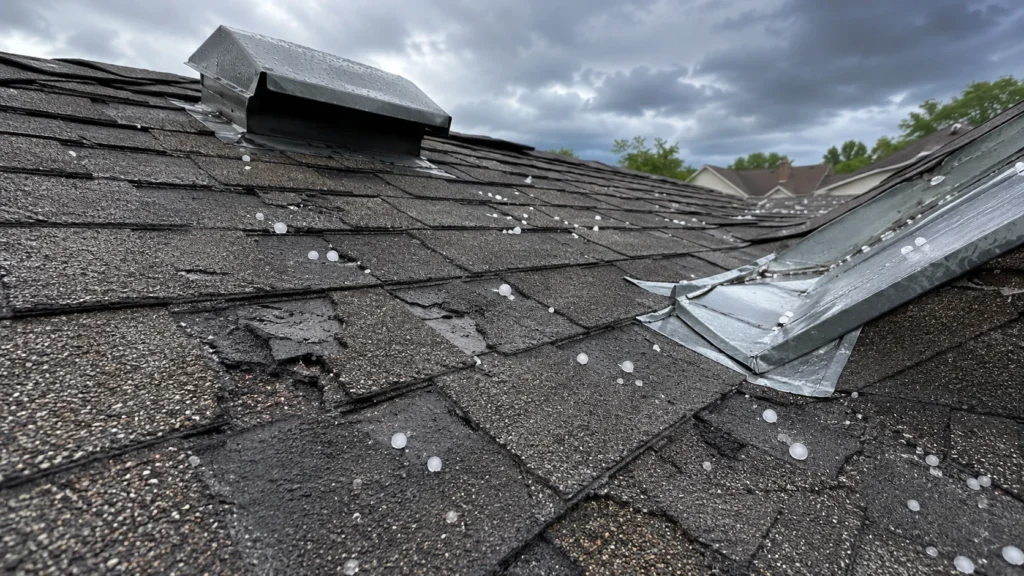
Place the estimates side by side. Start with measurements. Confirm the roof area, number of squares, waste percentage, ridge length, valley length, eave length, and number of penetrations.
Next, compare the actual work.
| Estimate Category | Items to Review |
| Removal | Shingles, underlayment, flashing, disposal |
| Materials | Shingles, starter, ridge cap, vents, fasteners |
| Labor | Standard, steep, high, complex-access charges |
| Components | Gutters, pipe boots, skylights, flashing |
| Compliance | Permits, code-required items, inspections |
| Finishing | Cleanup, painting, interior repairs, taxes |
A large price difference does not prove that one estimate is wrong. It signals the need for a detailed explanation. Ask the contractor to identify every disputed item and support it with photographs, measurements, manufacturer instructions, local requirements, or invoices.
Common Claim Disputes
“The Damage Is Wear and Tear”
Wear tends to appear gradually and consistently. Hail impacts are often concentrated, directional, or associated with collateral damage to nearby materials.
Useful evidence may include:
- Pre-storm photographs
- Maintenance records
- Weather reports
- Impact patterns
- Contractor observations
- Damage to gutters or vents
- Interior leak timing
- Prior inspection reports
Avoid relying on photographs alone when the cause is disputed. A qualified expert may need to explain how the physical characteristics support one cause over another.
“Only Repairs Are Needed”
Ask for the proposed repair method. Which shingles will be replaced? How will adjacent shingles be separated? Is the product available? Will the repair preserve waterproofing and manufacturer requirements? A repair estimate should be specific enough to test in the real world.
“The Damage Is Cosmetic”
Cosmetic damage exclusions are especially important for metal roofing.
Read the endorsement carefully. Determine which materials it applies to and how cosmetic damage is defined. Then evaluate whether the damage affects only appearance or also compromises coatings, seams, drainage, fasteners, service life, or warranty protection.
“The Claim Is Below the Deductible”
Request the written estimate anyway.
A claim may initially fall below the deductible because certain damage was missed, measurements were incorrect, or pricing was incomplete. A detailed contractor estimate may reveal a larger covered scope.
Supplemental Claims
A supplement is a request to reconsider or increase the estimated claim amount based on additional information.
Supplements commonly arise when:
- Hidden damage is discovered during removal
- Contractor pricing exceeds the original estimate
- Measurements differ
- Code requirements are confirmed
- Additional damaged components are identified
- Material availability changes the repair method
A strong supplement includes more than a revised total.
Submit:
- A detailed estimate
- Photographs
- Measurements
- Invoices
- Manufacturer instructions
- Permit requirements
- Product availability records
- A short explanation of each requested change
Keep the presentation organized. An adjuster should be able to see what changed, why it changed, and what evidence supports it.
How a Public Adjuster May Help
A public adjuster represents the policyholder during the preparation and negotiation of a property insurance claim.
Services may include:
- Reviewing the policy
- Documenting the damage
- Preparing a repair estimate
- Comparing competing scopes
- Communicating with the insurer
- Attending inspections
- Presenting supplemental information
- Tracking deadlines
- Organizing claim records
A public adjuster does not repair the roof, guarantee payment, or make the insurance company’s coverage decision. Before hiring one, verify Texas licensing, read the service agreement, understand the fee, and ask who will personally handle the claim. Avoid anyone who promises a specific settlement before completing a proper review.
When an Engineer May Be Necessary
Most residential roof claims do not require an engineer. Some do.
Engineering analysis may be useful when:
- The cause of damage is disputed
- Structural movement is suspected
- Metal panels or seams are involved
- The roof system is unusually complex
- The insurer and contractor strongly disagree
- Multiple storms may have contributed
- Interior moisture paths are unclear
An engineering report should address the actual dispute. A lengthy report that never explains whether hail damaged the roof provides little practical value.
Mistakes That Can Weaken a Claim
A few avoidable errors can make a valid heavy hail roof damage insurance claim harder to evaluate.
Waiting Too Long
Delayed reporting can make it difficult to connect the damage to a specific storm. Weather changes, additional storms, and continued deterioration may complicate the investigation.
Guessing the Storm Date
Check photographs, messages, weather alerts, neighborhood reports, and contractor records. If you remain unsure, say so rather than inventing a precise date.
Discarding Evidence
Do not throw away damaged shingles, flashing, ceiling materials, or temporary repair invoices before they are documented.
Making Permanent Repairs Too Soon
Emergency work may be necessary. Full replacement before the insurer has a reasonable opportunity to inspect can create disputes about cause, scope, and condition.
Accepting a Vague Estimate
An estimate should identify quantities, materials, labor, and individual components. A single lump-sum figure is difficult to compare or defend.
Signing Under Pressure
Read roofing contracts, public adjuster agreements, authorizations, and payment assignments before signing. Understand cancellation terms and financial obligations.
How Long Can the Claim Take?
There is no universal timeline. A straightforward claim may move through inspection and estimation fairly quickly. A complex claim involving widespread damage, multiple structures, engineering analysis, supplements, or coverage disagreements may take longer.
The general stages include:
- Claim reporting
- Initial inspection
- Coverage review
- Estimate preparation
- Payment or decision
- Contractor review
- Supplemental documentation
- Repairs
- Depreciation recovery
- Final claim closure
You can reduce avoidable delays by responding promptly, submitting organized documents, keeping appointments, and asking clear questions.
Strengthening Your Heavy Hail Roof Damage Insurance Claim
A strong claim is not the loudest claim. It is the clearest.
Use this practical checklist:
- Report the loss promptly.
- Photograph all affected areas.
- Create a written timeline.
- Prevent additional damage.
- Save receipts and damaged materials.
- Obtain a detailed roof inspection.
- Review the insurance estimate line by line.
- Support disputed items with evidence.
- Track every deadline.
- Keep important communication in writing.
Most importantly, separate facts from assumptions. You may know that water appeared after the storm. You may not yet know the exact entry point. Document the water, record the timing, and allow qualified professionals to investigate the cause.
Preparing for the Next Storm
Preparation begins before clouds appear. Schedule periodic roof inspections, especially after severe weather. Clean gutters, repair loose flashing, trim branches that touch the roof, and address small leaks before they spread.
Photograph the exterior of the property annually. Clear pre-loss images can become valuable evidence if a future dispute involves roof condition.
Review your policy as well. Confirm:
- The wind-and-hail deductible
- Replacement cost or actual cash value terms
- Roof age limitations
- Cosmetic damage exclusions
- Ordinance or law coverage
- Reporting deadlines
- Depreciation requirements
Consider impact-resistant roofing materials when replacement becomes necessary. They cannot eliminate damage, but they may reduce the severity of future losses. Ask your insurer whether approved materials qualify for a premium discount.
Final Thoughts
Heavy hail damage demands a measured response. Protect the property, document the conditions, understand the policy, and compare every estimate carefully. A heavy hail roof damage insurance claim may involve far more than replacing visible shingles. Gutters, vents, flashing, underlayment, decking, exterior surfaces, interior finishes, and code-related work may all require evaluation.
For property owners in Hutto, the strongest approach is practical and evidence-based. Keep records. Ask direct questions. Require clear explanations. The storm may last only a few minutes, but the decisions made afterward can affect the property for years. Handle the claim carefully, and never let urgency replace good judgment.
FAQs
Most homeowners policies cover hail damage, subject to the deductible, exclusions, roof endorsements, and other policy terms.
Report suspected damage promptly after safely documenting the property. Waiting too long may make it harder to connect the roof damage to a specific storm.
Yes. Hail may fracture shingles, damage protective coatings, or crack tiles without creating an obvious leak until weeks or months later.
No. A wet or damaged roof can be unstable, so use ground-level photographs and hire a qualified professional to perform the inspection.
Full replacement depends on the extent of damage, repairability, material availability, policy language, and whether repairs can restore the roof properly.
It is the amount you must pay toward a covered hail loss. Some policies use a fixed amount, while others calculate the deductible as a percentage of the property’s insured value.
Photograph the roof, gutters, vents, siding, windows, interior leaks, and damaged outdoor equipment. Also save weather alerts, repair receipts, inspection reports, and insurer communications.
Yes. An older roof may suffer covered storm damage, although depreciation, roof-payment schedules, and pre-existing deterioration can affect the settlement.
Compare the insurance estimate with a detailed contractor estimate and identify missing measurements, materials, labor, code items, or damaged components. You may then submit supporting documentation as a supplement.
A licensed public adjuster may document the loss, review the policy, prepare an estimate, attend inspections, and communicate with the insurer on behalf of the policyholder.