
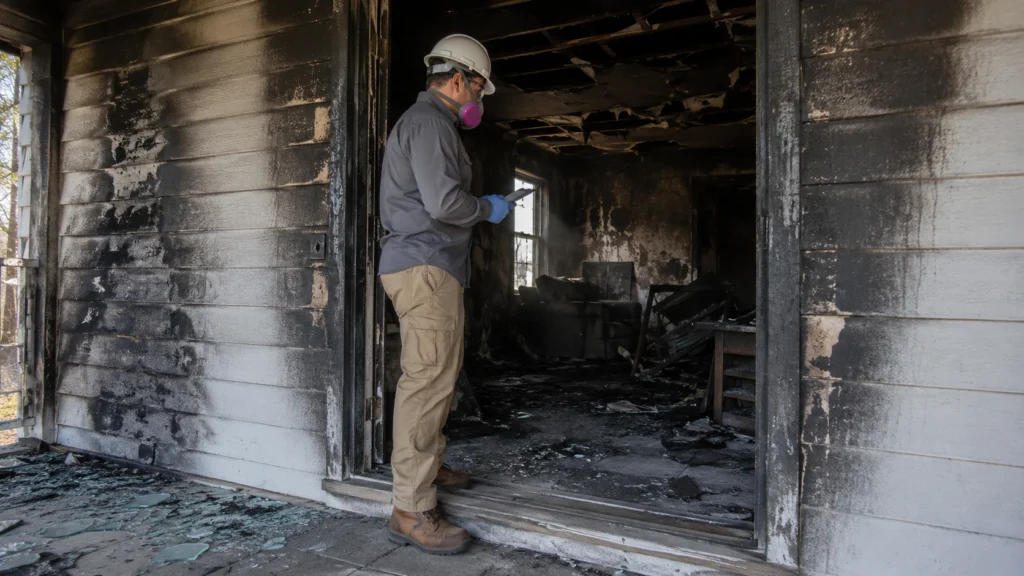
Learning how to document smoke damage for insurance can determine whether your claim reflects the full loss or only the damage noticed during a brief inspection. Smoke spreads fast, settles unevenly, and reaches areas flames never touched. Therefore, strong documentation must capture visible soot, lingering odors, damaged belongings, hidden contamination, emergency expenses, and the professional work needed to restore the property safely. A fire does not have to destroy an entire building to create an expensive claim. Even a small kitchen fire can send smoke through bedrooms, closets, air ducts, wall openings, and attic spaces. Meanwhile, heat, firefighting water, and suppression materials may create additional damage that overlaps with the smoke loss. That is why evidence matters immediately. Once walls are wiped, clothes are washed, filters are replaced, or damaged items are discarded, the original condition becomes harder to prove. Your first task is not to make the property look normal. It is to create a reliable record of what happened.
Smoke also behaves differently depending on what burned, how hot the fire became, and how air moved through the structure. Tiny particles may cling to surfaces through adsorption, a process in which molecules collect on another material’s surface. As a result, walls, cabinets, fabrics, and furniture may look relatively clean while still holding residue and odor. For property owners in Hutto, the first few days after a fire can feel chaotic. Fire officials may be leaving, restoration companies may be requesting authorization, and the insurance carrier may already be arranging an inspection. Yet this is exactly when a calm, organized documentation process delivers the most value.
Start broad. Photograph the entire property before focusing on individual stains, soot marks, or damaged belongings. Then move room by room, creating a visual trail that another person can follow without being present. The goal is not to send the insurer thousands of random images. More evidence helps only when it is clear, relevant, and properly labeled. Ten photographs of the same wall may add little. One wide room image, two midrange views, and several close-ups can tell a complete story.
You should also record rooms that appear unaffected. Smoke migration is not always visible at first, and conditions may become more obvious after the property sits closed or the heating and cooling system begins operating again. Photographs of apparently clean rooms provide a useful baseline. Although this guide focuses on smoke losses, the same evidence-first approach applies to other claims, including Heavy Hail Roof Damage Insurance disputes. The cause may differ, but the principle remains the same: record the condition before repairs, cleaning, disposal, or additional exposure changes the evidence.
Put Safety Before Documentation
No photograph is worth an injury. Do not enter the property until the fire department or another qualified authority says it is safe. A building that looks stable may contain weakened ceilings, damaged wiring, broken glass, contaminated water, or concealed hot spots.
When entry is allowed, wear suitable protective equipment. Depending on the conditions, that may include:
- Closed-toe shoes or work boots
- Disposable gloves
- Long sleeves and pants
- Eye protection
- Appropriate respiratory protection
- A hard hat in areas with overhead hazards
Avoid disturbing soot unnecessarily. Walking through heavily affected rooms, opening insulation, shaking fabrics, or operating fans can send particles back into the air. Likewise, do not turn on appliances, lights, or heating and cooling equipment until qualified professionals have assessed them. Keep children, pets, and unnecessary visitors outside. This reduces exposure and helps preserve the property’s condition before the insurer and restoration specialists inspect it.
Notify the Insurance Company Promptly
Report the loss as soon as reasonably possible. Ask for the claim number, the assigned adjuster’s name, contact information, and instructions for emergency measures.
During the initial conversation, clarify:
- When the first inspection will occur
- What immediate protective work is expected
- Whether damaged property may be moved
- Whether approval is needed before demolition
- How temporary housing expenses should be reported
- Where photographs, receipts, and estimates should be submitted
Write down the date, time, representative’s name, and a summary of the discussion. Follow important verbal conversations with an email. For example, you might confirm that emergency board-up and air filtration are allowed, but permanent repairs and disposal will wait until the inspection. Ask the carrier to correct you if that understanding is inaccurate. Reporting the claim does not transfer responsibility for documentation entirely to the insurance company. The carrier’s adjuster will gather information for the insurer. You should maintain your own complete record.
Do Not Clean Too Soon
The urge to clean is understandable. Soot feels invasive, smoke odors are unpleasant, and most people want their property to feel normal again.
Pause.
Before comprehensive documentation, avoid:
- Washing walls or ceilings
- Wiping cabinets and countertops
- Vacuuming soot with ordinary equipment
- Laundering all clothing and bedding
- Applying deodorizing sprays
- Repainting or sealing surfaces
- Replacing air filters
- Discarding furniture or household goods
- Authorizing broad demolition
Premature cleaning can smear residue, push particles deeper into porous materials, alter soot patterns, or remove evidence. In addition, the wrong cleaning product may react with residue and create permanent staining. Emergency action may still be necessary. Roof openings may require tarping, broken doors may need board-up, and standing water may need removal. Photograph and film the affected area before emergency work begins whenever it is safe. The rule is straightforward: protect the property from further damage, but preserve evidence of the original condition.
Create an Exterior Record
Before entering the building, walk around the exterior and photograph every side.
Begin with wide images showing:
- The front and rear of the structure
- Both side elevations
- Rooflines and exterior walls
- Windows and doors
- Vents and utility openings
- Fire department access points
- Detached structures
- Temporary tarps or boards
Then take closer photographs of soot near eaves, smoke marks around windows, broken siding, roof ventilation cuts, melted fixtures, water discharge points, and debris. Do not forget garages, sheds, workshops, outdoor kitchens, storage buildings, and vehicles. Exterior images help establish the scale of the event and may explain how smoke, rain, firefighting water, or debris entered the property.
Photograph Every Interior Room
A consistent room-by-room process is one of the strongest parts of how to document smoke damage for insurance. Random photographs are difficult to interpret. A repeatable system produces evidence that is easier to review. Begin at the doorway. Take one wide photograph before entering. Then stand in each corner and photograph toward the center. These overview images establish the room’s layout and show where individual damaged areas are located.
After the wide shots, move closer. Photograph:
- Walls and ceilings
- Floors and baseboards
- Doors and trim
- Windows and coverings
- Light fixtures and ceiling fans
- Supply and return vents
- Cabinets, drawers, and shelves
- Furniture and appliances
- Electronics
- Closets and stored belongings
Finally, take close-ups of soot, discoloration, sticky residue, blistered paint, staining, melted materials, and water marks. When scale is unclear, place a ruler or familiar object near the damage without covering it.
Use adequate lighting, but be careful with flash. Flash may reveal fine residue, yet it can also wash out a stain. Take one photograph with flash and one without when a condition is difficult to capture. Avoid digital zoom. Move closer when safe, hold the camera steady, and review each image before leaving the room.
Document Rooms That Look Clean
A room without obvious soot may still be affected. Smoke can pass under doors, move through wall penetrations, travel through ductwork, and settle inside enclosed storage areas. Odor may also become stronger after windows and exterior doors are closed.
Photograph guest rooms, closets, pantries, bathrooms, hallways, garages, attics, utility rooms, cabinets, and drawers. Open storage areas carefully and photograph the inside before moving contents. Light-colored objects may reveal residue more clearly than dark surfaces. However, avoid aggressive wipe tests. Dragging a cloth across a wall can alter evidence and produce misleading results.
Record a Video Walkthrough
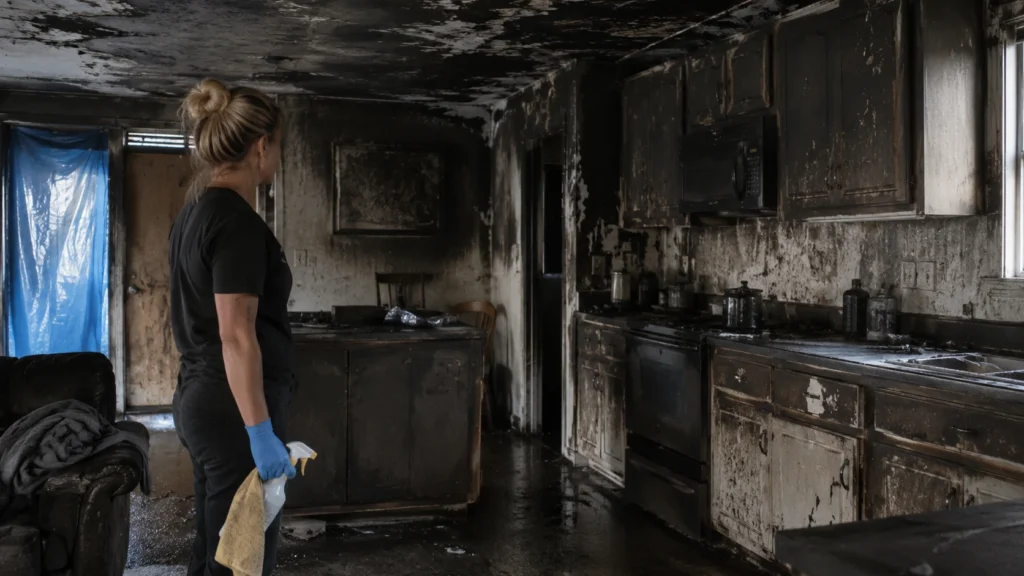
Photographs capture individual details. Video connects them. Start outside and state the date and purpose of the recording. Then walk through the building in a logical order. Move slowly. Rapid panning creates blurry footage and makes conditions difficult to evaluate.
Narrate what you observe:
- Identify each room
- Point out visible residue
- Describe where odors appear strongest
- Note water beneath cabinets or flooring
- Mention whether doors were closed during the fire
- State whether the heating and cooling system has operated
Be factual. Avoid guessing about causes or declaring every item beyond repair. Describe what you observe and allow qualified evaluators to address cleaning, testing, repair, or replacement. Save the original unedited footage. Edited clips may help explain specific issues, but original files preserve the complete sequence and available metadata.
Understand What You Are Looking For
Smoke damage is not always a uniform black coating. Its appearance depends on what burned and how the fire developed. A fast, hot fire may create a fine, dry residue that travels widely. A slower fire may leave sticky or smeary deposits. Burned food can create a thin film and powerful odor. Plastics, oils, and synthetic materials may produce residue requiring specialized cleaning.
Look for:
- Gray, brown, or black discoloration
- Fine powder on horizontal surfaces
- Sticky films on walls and cabinets
- Dark lines around vents
- Yellowing on paint or plastic
- Clouding on glass
- Tarnishing or corrosion on metal
- Odor trapped in fabrics
- Residue inside cupboards and drawers
Do not label the residue type unless you are qualified to do so. Instead, document its color, texture, location, and extent. A restoration specialist can determine the appropriate cleaning method.
Capture Hidden Smoke Migration
Visible surfaces are only part of the loss. Smoke follows airflow and pressure differences. Therefore, it can enter wall cavities, electrical openings, attics, insulation, ducts, cabinets, and enclosed chases. Damage in these areas may be missed during a brief inspection unless someone identifies and documents it.
Heating and Cooling Equipment
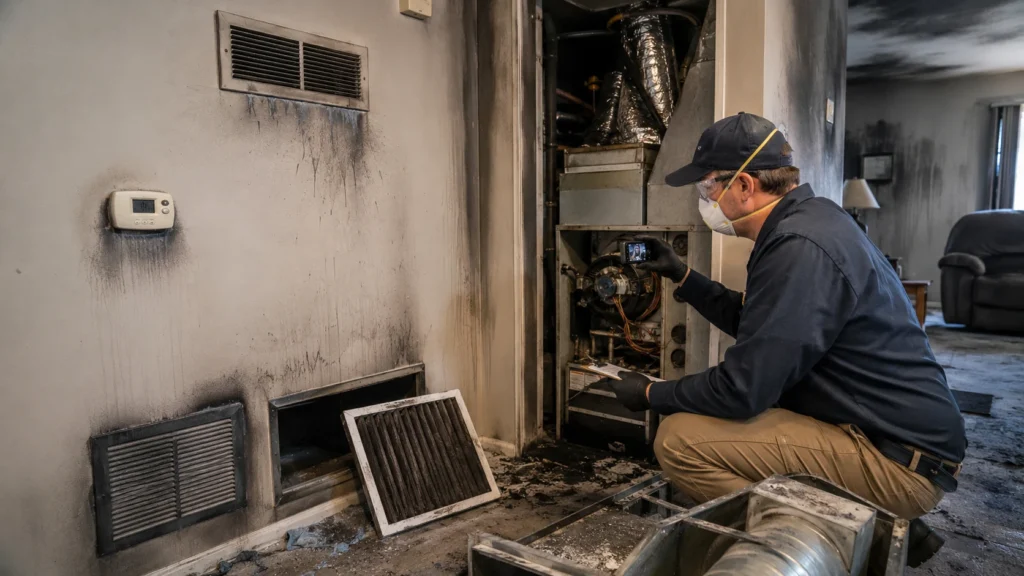
Photograph supply registers, return vents, thermostats, filters, air handlers, and accessible duct components. Note whether the system was operating during or after the fire. Do not turn on the system simply to test for odor. Operating contaminated equipment may distribute residue throughout the property.
Ask a qualified professional to document:
- Visible contamination
- Filter condition
- Residue inside accessible equipment
- Odor near registers
- Recommended cleaning
- Components requiring replacement
- Whether the system can be operated safely
Attics and Insulation
Smoke often rises into attic spaces. Photograph accessible framing, roof decking, insulation, stored contents, and ventilation points. Do not crawl through unstable or heavily contaminated areas. Moreover, avoid disturbing insulation merely to search for residue. A professional can assess concealed materials and explain whether cleaning, partial removal, or replacement is appropriate.
Cabinets and Wall Openings
Open cabinets, closets, and drawers one section at a time. Photograph the interior before moving contents. Pay attention to plumbing penetrations, electrical outlets, recessed lights, and gaps around built-in fixtures. These openings can provide routes for smoke movement between rooms. When destructive inspection is proposed, photograph the area before and after materials are opened. Record who approved the work and why it was necessary.
Create a Personal Property Inventory
Contents claims become difficult when owners try to remember everything at once. A room-by-room inventory works better. Start at one wall and move around the room in a consistent direction. Include high-value items, but do not overlook cookware, towels, shoes, toiletries, food, books, tools, cables, decorations, and bedding.
| Information | What to Record |
| Item | Clear name and description |
| Brand | Manufacturer, when known |
| Model | Model or product number |
| Age | Exact or estimated age |
| Original cost | Amount originally paid |
| Replacement cost | Current comparable price |
| Condition | Condition immediately before the fire |
| Damage | Soot, odor, heat, water, corrosion, or staining |
| Location | Room and storage area |
| Proof | Receipt, photograph, manual, or account record |
Avoid broad entries such as “electronics $5,000.” Break categories into individual items or reasonable groups. “One 55-inch television” is stronger than “living room electronics.” Describe the damage rather than automatically declaring a total loss. Write “visible residue near ventilation openings and strong smoke odor” rather than “destroyed television.” A specialist can determine whether cleaning and testing are appropriate.
Gather Proof of Ownership and Value
Receipts help, but they are not the only evidence.
Search for:
- Credit card statements
- Bank records
- Online purchase histories
- Email confirmations
- Warranty registrations
- Manuals and serial numbers
- Pre-loss photographs
- Family videos
- Moving inventories
- Gift receipts
Casual photographs can be surprisingly useful because furniture, curtains, lamps, appliances, and decorations may appear in the background. For replacement prices, save screenshots or PDF copies of comparable products. Record the retailer and date because online listings change. Choose genuinely comparable items. Match the brand, size, material, features, capacity, and quality as closely as possible. Do not use the cheapest available item when it is not equivalent, but avoid selecting an obvious upgrade.
Document Building Materials and Finishes
Smoke may affect drywall, plaster, paint, wallpaper, trim, doors, cabinets, carpet, flooring, tile, grout, insulation, framing, electrical components, appliances, and windows. Photograph transitions between materials. Soot may be more visible where a wall meets the ceiling or where furniture protected part of the floor. Record material characteristics as well. Cleaning unfinished wood differs from cleaning sealed wood. Textured ceilings, porous grout, fabric wall coverings, and acoustic panels may require different treatment.
When a contractor recommends replacement, ask for the reason in writing. A useful explanation may state that the material is porous, cannot be cleaned on every side, continues to hold odor, or would be damaged by the required cleaning method. Specific reasoning is much stronger than a simple statement that replacement is necessary.
Document Smoke Odor
A camera cannot capture smell. You need written observations and professional support.
Create an odor log containing:
- Date and time
- Room
- Odor intensity
- Conditions when noticed
- Whether doors and windows were open
- Whether mechanical equipment was operating
- Areas where the odor increased
- Names of other people who noticed it
Use consistent descriptions such as slight, moderate, strong, or overwhelming. Consistency makes comparisons easier. Ask contractors and inspectors to include odor observations in their reports. A written statement that strong smoke odor remained inside a closed cabinet is more useful than a verbal comment that never reaches the claim file. For significant disputes, specialized testing may be appropriate. Testing should answer a defined question, follow a documented method, and be interpreted by someone qualified.
Obtain Professional Reports
Photographs establish conditions. Professional reports explain what those conditions mean.
Depending on the loss, useful specialists may include:
- Fire restoration contractors
- Heating and cooling professionals
- Electricians
- Structural engineers
- Industrial hygienists
- Appliance technicians
- Electronics evaluators
- Textile restoration companies
Ask each professional for a written scope. It should identify the areas inspected, conditions observed, testing performed, limitations, recommended cleaning or repairs, safety concerns, and supporting photographs. Specific language matters. “Clean house” is vague. “HEPA vacuum and wet-clean painted walls and ceilings in the living room, hallway, and two bedrooms” is clear.
Request Detailed Estimates
A total dollar amount without supporting detail is difficult to review.
Request estimates that separate:
- Emergency services
- Contents handling
- Surface cleaning
- Textile cleaning
- Deodorization
- Mechanical-system work
- Demolition
- Disposal
- Material replacement
- Equipment
- Storage
- Reconstruction
The estimate should include measurements, quantities, labor rates, material rates, and proposed cleaning methods. Compare the contractor’s scope with the insurer’s estimate line by line. Missing rooms, incomplete measurements, omitted contents handling, limited ductwork, and unsupported cleaning assumptions often create substantial differences.
Keep a Claim Journal
A smoke claim may involve dozens of calls, inspections, emails, documents, and deadlines. Memory is not enough.
Maintain a journal with:
- Date and time
- Person contacted
- Company and role
- Communication method
- Topics discussed
- Documents requested
- Commitments made
- Deadlines
- Follow-up actions
Keep entries factual. Save important emails as PDF files, preserve text messages, and record document-upload confirmations. When submitting a large package, include a cover page listing every attachment.
Track Every Expense
Fire losses create immediate costs. Save all receipts, even when you are unsure whether an expense is covered. Possible expenses include emergency board-up, roof tarping, air filtration, temporary power, security, moving, storage, lodging, additional meals, laundry, replacement clothing, pet boarding, transportation, and essential household items.
Separate normal expenses from additional costs caused by the loss. Write the purpose on each receipt because a generic store receipt may not explain what was purchased. Photograph paper receipts because thermal printing can fade. Store copies by category and month.
Control Emergency Mitigation
Before restoration work begins, photograph every work area, record equipment placement, obtain the work authorization, ask how charges are calculated, and clarify who may approve demolition or disposal. During the work, request daily logs showing labor, equipment use, cleaning activities, and removed materials.
Do not sign an open-ended authorization without reading it. Some agreements give contractors broad control over demolition, storage, insurer communication, or payment. Require documentation before anything is discarded. At minimum, retain photographs, measurements, item descriptions, and written authorization.
Avoid Common Documentation Mistakes
Common mistakes include taking only close-ups, photographing only the fire room, cleaning too early, discarding contents, using vague inventory entries, relying on one device, and exaggerating damage. Pair close-ups with overview images. Document the entire property. Back up your files promptly. Most importantly, describe what you observe without overstating it. Credibility matters. A detailed record based on facts is more persuasive than unsupported claims that every exposed surface or item must be replaced.
Organize the Evidence
Knowing how to document smoke damage for insurance also means knowing how to present the evidence.
Create folders for:
- Policy and claim information
- Exterior photographs
- Interior photographs by room
- Videos
- Personal property inventory
- Ownership and valuation records
- Contractor estimates
- Professional reports
- Emergency mitigation
- Additional living expenses
- Insurer correspondence
- Claim journal
Use descriptive file names such as Living-Room-North-Wall-Soot.jpg rather than IMG_4721.jpg. Keep original files and create copies for annotations. Do not overwrite originals with cropped, filtered, or marked-up versions. Store the claim file in at least two places, such as secure cloud storage and an external drive.
Cleaning Versus Replacement
Not every smoke-exposed material requires replacement. Likewise, not every item can be restored through surface cleaning.
The decision depends on:
- Material type
- Porosity
- Residue composition
- Heat and water exposure
- Access to affected surfaces
- Manufacturer guidance
- Safety considerations
- Cleaning results
- Restoration cost
A sealed metal surface may clean well. Porous insulation may hold residue throughout its depth. Electronics may require internal inspection and testing. Upholstery may need specialist treatment. Ask the evaluator to explain the proposed process and define what successful cleaning looks like. What happens if odor, staining, corrosion, or contamination remains? Trial cleaning may be useful. Document the pre-cleaning condition, products used, method, and result. However, one successful test on a painted wall does not prove that wood, fabric, and insulation can be restored the same way.
Review the Insurance Estimate
Do not focus only on the total at the bottom. Check whether all affected rooms are included, measurements are accurate, and walls, ceilings, floors, trim, mechanical systems, contents handling, demolition, disposal, and specialty items are addressed. Mark every omission and connect it to evidence. Instead of writing that the estimate is too low, identify the missing room, reference the photographs, and point to the contractor’s corresponding scope. Specific corrections are easier to evaluate and harder to overlook.
Submit Supplemental Documentation Clearly
Additional damage is often discovered after the first inspection. A supplemental request should show what changed and why.
Include:
- A concise cover letter
- A list of omitted or newly discovered damage
- Relevant photographs
- Contractor estimates
- Inspection reports
- Inventory updates
- Invoices
- A clear requested action
Separate coverage disputes from pricing disputes. The insurer may agree that an area is covered while disagreeing about the repair method or cost. Keep proof of submission and record the expected response date in your claim journal.
When Smoke Damage Is Disputed
If the carrier excludes an area, limits cleaning, or denies replacement, request a written explanation. Ask what factual finding supports the decision, what policy provision is being applied, whether the disputed area was physically inspected, what evidence was considered, and what happens if the proposed cleaning method fails.
Do not rely only on telephone discussions. Written explanations allow contractors, consultants, and claim professionals to address the actual disagreement. Additional inspection or testing may be appropriate, but it should answer a specific disputed point rather than create another large report without a clear purpose.
How a Public Adjuster May Help
A smoke claim can involve building damage, personal property, temporary housing, emergency mitigation, specialty cleaning, and several competing estimates. That is a significant administrative burden. A licensed public adjuster may help document the loss, organize inventories, review estimates, identify omissions, communicate with the carrier, and prepare supplemental submissions.
For property owners in Hutto, local familiarity may also help when coordinating inspections, restoration work, and the practical demands created by Central Texas weather and construction conditions. Professional assistance does not replace honest evidence. Instead, it can help present that evidence clearly and systematically.
Final Smoke Damage Checklist
Before submitting the claim, confirm that:
- The property was declared safe
- The insurer was notified
- Every room was photographed
- A video walkthrough was saved
- Hidden areas were considered
- Personal property was inventoried
- Ownership records were gathered
- Smoke odor was documented
- Reports and estimates were collected
- Emergency expenses were saved
- Communications were logged
- Original files were backed up
- The insurer’s estimate was reviewed
Then compare your room list with the photographs and videos. Match inventory entries to ownership records. Review contractor reports for missing areas or inconsistent descriptions. Create an index listing each section of the submission. Send copies rather than your only originals, and retain a complete duplicate claim file.
Build the Record Before the Evidence Changes
The strongest smoke claims are built methodically. They show the entire property, connect close-up damage to specific rooms, identify affected belongings, preserve expense records, and support technical concerns with professional findings.
That is the heart of how to document smoke damage for insurance. Photograph first. Write everything down. Preserve original files. Obtain detailed reports. Question vague estimates. Most importantly, do not allow cleaning, demolition, or disposal to erase the story before it has been recorded. Smoke damage can be subtle, widespread, and expensive. Your evidence should be just as thorough.
FAQs
Photograph every room using wide shots, midrange views, and close-ups of soot, stains, damaged materials, vents, furniture, and personal belongings.
Avoid cleaning, repainting, deodorizing, or discarding damaged property until you have documented it and confirmed the insurer’s inspection requirements.
Keep an odor log noting the date, room, intensity, conditions, and people who noticed it. Ask restoration professionals to include odor observations in written reports.
Yes. Smoke can travel through door gaps, wall openings, and HVAC systems, so photograph every room, closet, cabinet, and storage area.
Include each item’s description, brand, model, age, original cost, replacement price, pre-loss condition, damage, location, and proof of ownership.
Do not discard items until they have been photographed, inventoried, and approved for disposal when required. Keep written authorization and disposal records.
Bank statements, credit card records, online orders, warranties, manuals, photographs, videos, packaging, and comparable retail listings may support ownership and value.
Do not operate it until a qualified professional checks it. Running contaminated equipment may spread smoke residue and odor throughout the property.
Create separate folders for photographs, videos, inventories, estimates, professional reports, receipts, mitigation records, expenses, and insurer correspondence.
Consider professional help when the loss is extensive, important damage is omitted, estimates differ significantly, or managing the claim becomes overwhelming.