

An appraisal for hail damage claim can become important when an insurance company accepts that a storm caused damage but disagrees with the policyholder about how much the repairs should cost. Perhaps the insurer allows a few replacement shingles while a contractor recommends replacing an entire roof slope. Maybe gutters, flashing, siding, windows, or interior finishes were left out. When the numbers remain far apart, appraisal may provide a structured way to determine the amount of the loss. The process sounds simple. Each side chooses an appraiser, the appraisers compare the damage, and an umpire may resolve any remaining differences. In reality, appraisal requires careful preparation. It has deadlines, expenses, defined roles, and limitations that should be understood before anyone sends a formal demand.
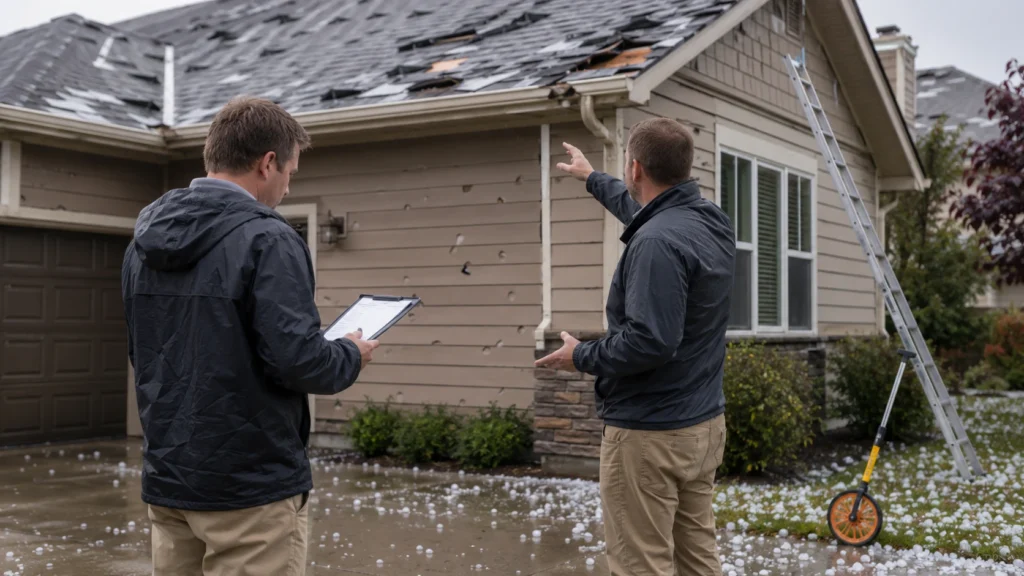
For property owners in Hutto, hail damage disputes often begin after a fast-moving Texas storm affects several building components at once. The first insurance estimate may focus mainly on the roof, even though the gutters, exterior finishes, mechanical equipment, fencing, and interior rooms also sustained damage. Before considering appraisal, the policyholder should determine whether the disagreement concerns coverage, repair scope, pricing, depreciation, or several issues combined. Inspections may use drones, digital measurement reports, moisture meters, and photogrammetry, a process that obtains measurements and physical information from photographs. These tools can improve accuracy, especially on large or steep roofs. However, technology does not settle the claim by itself. The findings must still be explained, supported, and connected to the repairs being requested.
What Is an Appraisal for a Hail Damage Claim?
Appraisal is a dispute-resolution process included in many property insurance policies. It is generally used when the insurer and policyholder disagree about the amount of a covered loss. Each side selects an appraiser, and those appraisers attempt to agree on the value of the damage. If they cannot reach an agreement, they may submit their differences to an umpire. Appraisal usually addresses value rather than broad legal coverage questions. It may determine the necessary repair scope, quantities, labor costs, material costs, replacement cost, actual cash value, and depreciation. However, it does not automatically establish that every disputed item is covered under the policy.
That distinction is critical. An appraisal panel might determine that repairs should cost $65,000 rather than the insurer’s original $35,000 estimate. Even so, the final payment may still be affected by the deductible, previous payments, depreciation, exclusions, policy limits, and unresolved coverage positions. Therefore, an appraisal for hail damage claim should be viewed primarily as a valuation process. It is designed to answer practical questions:
- What property was damaged?
- What work is needed to restore it?
- Which materials and quantities are required?
- What should labor and materials reasonably cost?
- How much depreciation applies?
- What is the replacement cost and actual cash value?
Appraisal is not the correct response to every disappointing settlement. First, the policyholder must identify the real dispute.
Why Hail Claims Produce Large Estimate Differences
Hail damage is rarely as simple as counting dents or broken shingles. Different inspectors may reach different conclusions because they use different measurements, pricing databases, inspection methods, repair assumptions, and opinions about repairability.
One estimate may include individual shingle replacement. Another may conclude that the surrounding shingles are brittle, sealed tightly, or unavailable in a comparable product. One estimate may include underlayment, starter strips, flashing, vents, waste, and disposal. Another may leave several of those items out. Timing also matters. When Insurance Timing Quietly Costs You Thousands describes what can happen when missing repairs, damaged materials, temporary work, unanswered correspondence, or interior leaks remain undocumented while the claim continues moving forward.
Common disagreements include:
| Disputed issue | Typical disagreement |
| Roof scope | Spot repairs versus full-slope replacement |
| Measurements | Different dimensions, pitch factors, or waste |
| Materials | Basic products versus comparable replacements |
| Labor | Different local installation rates |
| Accessories | Omitted flashing, vents, gutters, or drip edge |
| Code work | Disagreement about required upgrades |
| Interior damage | Missing drywall, paint, insulation, or flooring |
| Depreciation | Different age or condition calculations |
| Cause of damage | Hail impact versus wear or deterioration |
Even a modest measurement difference can affect the entire estimate. On a complex roof, an incorrect quantity changes the materials, labor, waste, accessories, hauling, and disposal costs at the same time. That is why appraisal should begin with the scope of work rather than the final price alone.
When Should Appraisal Be Considered?
Appraisal may make sense when the insurance company acknowledges covered hail damage but the parties cannot agree on its value. The amount in dispute should also be large enough to justify the expense.
Situations that may support appraisal include:
- The insurer omitted damaged building components.
- The contractor’s scope is substantially broader.
- Roof or building measurements differ.
- Necessary labor operations were excluded.
- Local material prices are disputed.
- A documented supplement did not resolve the issue.
- The proposed repair cannot reasonably be completed.
- Interior damage connected to the storm was undervalued.
- Depreciation calculations appear inconsistent.
- Negotiations have stalled despite strong documentation.
Do not demand appraisal simply because a contractor’s estimate is higher. Compare the two estimates line by line and identify exactly why they differ. Suppose the insurer estimates $28,000 in repairs while the contractor estimates $52,000. The apparent difference is $24,000, but that does not prove the insurer underpaid by that amount. The contractor’s estimate may include elective upgrades, uncovered work, duplicated items, or premium materials. Conversely, the insurance estimate may omit necessary labor and damaged components. A careful comparison separates supported differences from unnecessary additions.
Review the Insurance Policy First
Before demanding an appraisal for hail damage claim, obtain the complete insurance policy. This includes the declarations, endorsements, exclusions, amendments, and appraisal provision.
Read the appraisal clause carefully. It may explain:
- Who can demand appraisal
- How the demand must be delivered
- When appraisers must be selected
- What qualifications appraisers need
- How the umpire is chosen
- How expenses are divided
- How an award becomes binding
- Whether certain disputes are excluded
- Whether other policy rights are preserved
Do not assume that every policy uses identical language. A contractor or consultant may describe the general process correctly, yet the actual policy controls the claim. Deadlines deserve equal attention. The policy may contain requirements involving notice, proof of loss, document production, inspections, cooperation, repairs, depreciation recovery, and legal action. Appraisal may not pause those separate obligations.
When the language is unclear or the claim is large, professional guidance may be appropriate. A public adjuster may assist with claim documentation and valuation. An attorney may address legal rights, coverage disputes, deadlines, or policy interpretation.
Coverage Dispute or Valuation Dispute?
This question can determine whether appraisal fits the problem. A valuation dispute concerns the cost, quantity, scope, or value of covered damage. A coverage dispute concerns whether the policy covers the damage in the first place.
Consider these examples:
Valuation dispute: The insurer agrees that hail damaged the roof but estimates the repairs at $20,000, while the property owner presents a supported $42,000 scope. Coverage dispute: The insurer concludes that the roof condition resulted entirely from age and deterioration rather than hail.
Mixed dispute: The insurer accepts damage to gutters and vents but denies that hail damaged the shingles. Mixed disputes can be difficult. The appraisal panel may determine the amount of physical damage, while the insurer continues to reserve a coverage position. As a result, the award may establish value without requiring immediate payment for every item.
Before proceeding, describe the disagreement in one sentence: The insurer accepted the hail loss but omitted two roof slopes, damaged gutters, flashing, and interior ceiling repairs. That statement is more useful than saying the offer is unfair.
How the Appraisal Process Works
Although policy language varies, the process generally follows several stages.
A Written Demand Is Submitted
Appraisal usually begins when one party sends a written demand. The notice should identify the property address, policy number, claim number, date of loss, and disputed claim. The demand should be clear and professional. Avoid emotional accusations or unsupported conclusions. The purpose is to invoke a contractual process, not argue every repair item in a single letter. Keep a copy and retain proof of delivery. Follow any method or deadline stated in the policy.
Each Side Selects an Appraiser
The policyholder selects one appraiser, and the insurance company chooses another. The appraisers review the loss independently and attempt to reach an agreement.
An insurance appraiser is not the same as a real estate appraiser who values property for a mortgage. The selected person should understand construction, hail damage, repair estimating, appraisal procedures, and the building systems involved.
Appraisers may review:
- Photographs and videos
- Roof measurements
- Insurance estimates
- Contractor estimates
- Inspection reports
- Weather records
- Material availability
- Building code information
- Repair invoices
- Maintenance records
- Previous claim information
- Interior moisture findings
A qualified appraiser should not simply repeat the policyholder’s preferred total. The appraiser should independently evaluate the loss and support a reasonable valuation.
The Appraisers Select an Umpire
The two appraisers usually choose a neutral umpire. The umpire becomes involved when the appraisers cannot resolve specific differences.
Umpire selection matters. The person may need to evaluate technical questions involving roofing systems, repair methods, code requirements, interior restoration, material availability, and construction pricing. The appraisers should consider experience, impartiality, availability, fees, and potential conflicts. If they cannot agree, the policy may provide a procedure for requesting court appointment.
The Property Is Inspected
The inspection is one of the most important stages of an appraisal for hail damage claim. Prepare the property and the evidence in advance. Make affected areas accessible. Organize documents by building component. Identify damage clearly, but avoid exaggerating conditions or directing the appraisers toward a predetermined conclusion.
The inspection may include:
- Roof coverings
- Ridge and hip caps
- Valleys
- Underlayment
- Flashing
- Chimneys
- Vents and penetrations
- Gutters and downspouts
- Siding
- Windows and screens
- Exterior finishes
- Fencing
- Detached structures
- Outdoor equipment
- Attic spaces
- Ceilings and walls
- Flooring and insulation
The appraisers may inspect together or separately. Additional records may be requested afterward.
Estimates Are Compared
After the inspection, the appraisers prepare or revise their estimates. They identify agreed items first and then focus on unresolved differences. One appraiser may argue that individual shingles can be replaced. The other may show that matching materials are unavailable, surrounding shingles are brittle, or the proposed repair would disturb adjacent components.
Pricing may also require discussion. Estimating software can provide useful data, but it does not replace professional judgment. The estimate must account for the date of loss, location, roof complexity, labor conditions, access, material availability, and actual repair sequence. If the appraisers agree, they may sign an award. If not, the remaining items can be presented to the umpire.
The Award Is Issued
The policy explains how many signatures are required. Many clauses state that an agreement signed by any two panel members establishes the amount of loss.
The award may include:
- Replacement cost value
- Actual cash value
- Depreciation
- Separate building amounts
- Agreed repair categories
- Total loss value
The insurer then calculates payment according to the policy. It may subtract the deductible, previous payments, depreciation not yet recoverable, policy limits, or amounts connected to disputed coverage. An appraisal award is not automatically equal to the next check.
Document the Complete Damage Scope
Good documentation shows both the damage and the work required to restore the property. Random photographs without labels or context may not be enough. Begin with wide views that establish location. Then take medium-range and close-up images. Organize files by area and component.
Examples include:
- North roof slope overview
- North slope hail impact near vent
- West gutter denting
- Living room ceiling stain
- Attic moisture above living room
Keep original image files whenever possible. Screenshots and compressed copies may remove useful details. Temporary repairs should also be documented. Photograph the condition before work starts, during the repair, and after completion. Save receipts, invoices, labor records, and contractor notes.
Avoid permanent repairs until the insurer has had a reasonable opportunity to inspect, unless emergency work is necessary to protect people or prevent additional damage.
Create a Line-by-Line Comparison
A detailed estimate comparison can reveal exactly where the claim diverges.
| Repair item | Insurer estimate | Property owner estimate | Reason for difference |
| Roof quantity | 30 squares | 35 squares | Measurement and waste difference |
| Underlayment | Partial | Full | Removed during replacement |
| Valley metal | Omitted | Included | Existing metal must be removed |
| Gutters | Front only | All elevations | Damage documented on every side |
| Interior paint | One wall | Connected area | Repair and finish consistency |
This comparison forces the dispute into specific categories. It can also reveal unsupported contractor additions or mistakes in the insurance estimate. Support major differences with evidence. A statement that a repair is standard practice is less persuasive than a photograph, manufacturer instruction, material record, measurement, code section, or detailed contractor explanation.
Repairability and Material Availability
Many hail claims turn on whether damaged materials can be repaired individually. Replacing one shingle may require lifting surrounding shingles. If those materials are brittle, tightly sealed, aged, or discontinued, the repair may cause additional damage or produce an inconsistent result.
Similar problems occur with:
- Discontinued siding
- Faded finishes
- Custom metal panels
- Older tile profiles
- Specialty gutters
- Window components
- Textured ceilings
- Continuous flooring
Do not assume that every cosmetic difference requires full replacement. However, do not accept a theoretical repair that cannot be completed safely or reasonably.
Ask contractors or suppliers specific questions:
- Is the original product still manufactured?
- Is a comparable profile available?
- Can the damaged component be removed safely?
- Will the repair follow manufacturer instructions?
- Can the work produce a reasonably consistent finish?
- Would a controlled repairability test help?
Written, specific answers carry more weight than general opinions.
Building Codes and Required Work
A roof replacement may trigger work that was not part of the original construction. Depending on the property and local requirements, this may involve decking, underlayment, ventilation, flashing, fastening methods, permits, or inspections.
Still, not every recommended upgrade is required.
Separate the issue into three questions:
- What work is physically necessary to repair the hail damage?
- What additional work is required by an applicable code?
- Does the policy cover that additional cost?
Provide written support. A note stating “code upgrade” may not be enough. Identify the requirement, explain why it applies, and connect it directly to the repair.
Depreciation and Claim Payments
Depreciation can make the final calculation confusing. Replacement cost value generally represents the estimated cost to repair or replace without subtracting depreciation. Actual cash value typically reflects depreciation, depending on the policy wording. Some policies allow recoverable depreciation after covered repairs are completed and documented. Others impose restrictions or deadlines.
Consider this simplified example:
| Calculation | Amount |
| Appraisal replacement cost | $68,000 |
| Less depreciation | $14,000 |
| Actual cash value | $54,000 |
| Less deductible | $5,000 |
| Less previous payment | $29,000 |
| Potential additional payment | $20,000 |
The remaining depreciation may be payable after qualifying repairs are completed, subject to the policy. Actual calculations may also include limits, exclusions, prior payments, or multiple deductibles. Ask the insurer for a written breakdown after the award.
Choosing an Appraiser
The selected appraiser can influence the efficiency and quality of the process. Cost matters, but it should not be the only deciding factor.
Ask about:
- Hail claim experience
- Knowledge of the building system
- Construction estimating skills
- Familiarity with local pricing
- Availability for inspections
- Experience working with umpires
- Fee structure
- Potential conflicts
- Written engagement terms
Be cautious with anyone who guarantees a specific award. A credible appraiser can explain the strengths and weaknesses of the claim but cannot control the panel’s decision. For a major property loss in Hutto, the selected professional should be able to explain complex repair issues clearly, support the estimate with evidence, and remain focused on a reasonable amount of loss.
Appraiser, Public Adjuster, and Umpire
These professionals perform different roles.
| Professional | Primary role |
| Public adjuster | Assists with claim preparation, documentation, and negotiation |
| Appraiser | Evaluates the amount of loss during appraisal |
| Umpire | Decides unresolved differences between appraisers |
| Contractor | Evaluates and performs repair work |
| Attorney | Provides legal advice and representation |
A public adjuster may prepare estimates, identify omitted damage, organize evidence, communicate with the insurer, and help determine whether appraisal fits the dispute. An appraiser evaluates the amount of loss within the formal process. The umpire considers unresolved valuation issues. Property owners should confirm qualifications, contracts, licensing, and potential conflicts before hiring anyone.
Appraisal Costs and Timing
There is no universal completion period. A straightforward residential dispute may move efficiently, while a large commercial loss can take much longer.
The timeline may depend on:
- Appraiser availability
- Property access
- Number of buildings
- Quality of documentation
- Material research
- Estimate complexity
- Umpire selection
- Expert reports
- Cooperation between the parties
Costs may include appraiser fees, umpire fees, travel, measurement reports, material testing, engineering, estimating, and legal review. Compare those expenses with the realistic amount in dispute. Spending several thousand dollars to pursue a weak $8,000 difference may not make financial sense. The same expense may be reasonable when a well-supported six-figure disagreement exists.
Common Mistakes to Avoid
Several mistakes can weaken an appraisal for hail damage claim:
- Demanding appraisal before reading the policy
- Missing claim or repair deadlines
- Discarding damaged materials
- Making undocumented permanent repairs
- Choosing an appraiser only by price
- Hiring someone who guarantees results
- Failing to disclose earlier damage
- Including unrelated upgrades
- Ignoring interior damage
- Relying on verbal conversations
- Confusing the award with guaranteed payment
- Submitting evidence too late
Credibility matters. If damage existed before the storm, disclose it. If repairs were completed previously, retain the invoices. Honest documentation makes the remaining evidence stronger.
What Happens After the Award?
Review the award alongside the policy, previous payments, insurer estimates, and deductible information.
Confirm:
- Which structures are included
- Whether replacement cost and actual cash value are separated
- How depreciation was calculated
- Whether previous payments were credited
- Which deductible applies
- Whether limits affect payment
- Whether coverage issues remain
- What documents are required for depreciation recovery
- Which repair deadlines apply
Request a written explanation if the payment does not match your expectation. Continue saving invoices, contracts, canceled checks, photographs, and completion records.
How a Public Adjuster May Help
A public adjuster may help prepare the claim before appraisal by:
- Reviewing the claim file
- Inspecting visible damage
- Preparing a repair estimate
- Comparing competing scopes
- Identifying omitted items
- Organizing photographs and reports
- Documenting temporary work
- Communicating with the insurer
- Preparing a supplement
- Clarifying the valuation dispute
A public adjuster does not guarantee coverage, control the insurer, or dictate the appraisal award. The value lies in creating a clear, supported claim. In some cases, strong documentation resolves the disagreement before appraisal is necessary. That can save time and expense.
Practical Appraisal Checklist
Before demanding appraisal:
- Obtain the complete policy.
- Read the appraisal clause.
- Review all insurer letters.
- Separate accepted and denied damage.
- Compare estimates line by line.
- Confirm measurements.
- Collect original photographs.
- Save weather and inspection records.
- Document temporary repairs.
- Preserve damaged materials when practical.
- Verify material availability.
- Identify applicable code requirements.
- Calculate the realistic dispute.
- Estimate appraisal expenses.
- Interview qualified appraisers.
- Review the engagement agreement.
- Track every deadline.
- Keep communications in writing.
- Prepare the property for inspection.
- Review the award and payment calculation.
Final Thoughts
An appraisal for hail damage claim can provide a structured path forward when an insurer and policyholder agree that covered damage occurred but cannot agree on its value. It may clarify the repair scope, establish loss amounts, and create a stronger basis for payment calculations. Still, appraisal is not automatic or risk-free. The strongest claims rely on accurate measurements, credible photographs, detailed estimates, qualified professionals, and clear explanations. Property owners should understand the policy language, deadlines, costs, and remaining coverage issues before beginning. Document the damage early. Compare every estimate carefully. Preserve receipts and repair records. When the dispute truly concerns the amount of loss and the evidence supports the requested repairs, appraisal may provide a practical way to move the claim toward resolution.
FAQs
An appraisal is a policy-based process used to determine the amount of a covered property loss when the insurer and policyholder disagree.
Consider appraisal when the insurer accepts hail damage but disputes the repair scope, measurements, pricing, depreciation, or total value.
Appraisal generally determines the amount of loss rather than resolving every coverage dispute. Payment remains subject to the policy’s terms, exclusions, limits, and deductible.
The policyholder and insurance company usually select one appraiser each. The two appraisers may then choose a neutral umpire.
The umpire reviews unresolved differences when the two appraisers cannot agree. An award signed according to the policy’s requirements may establish the amount of loss.
The timeline depends on the claim’s complexity, appraiser availability, property access, documentation, and whether an umpire becomes involved.
The policyholder usually pays their appraiser, while umpire expenses may be divided between the parties. Additional costs may include inspections, measurements, testing, or expert reports.
Useful evidence includes photographs, videos, estimates, roof measurements, inspection reports, invoices, weather records, and documentation of temporary repairs.
No. The insurer may still subtract deductibles, previous payments, depreciation, policy limits, or amounts connected to unresolved coverage issues.
A public adjuster may document damage, prepare estimates, compare repair scopes, organize evidence, and clarify the amount-of-loss dispute.