
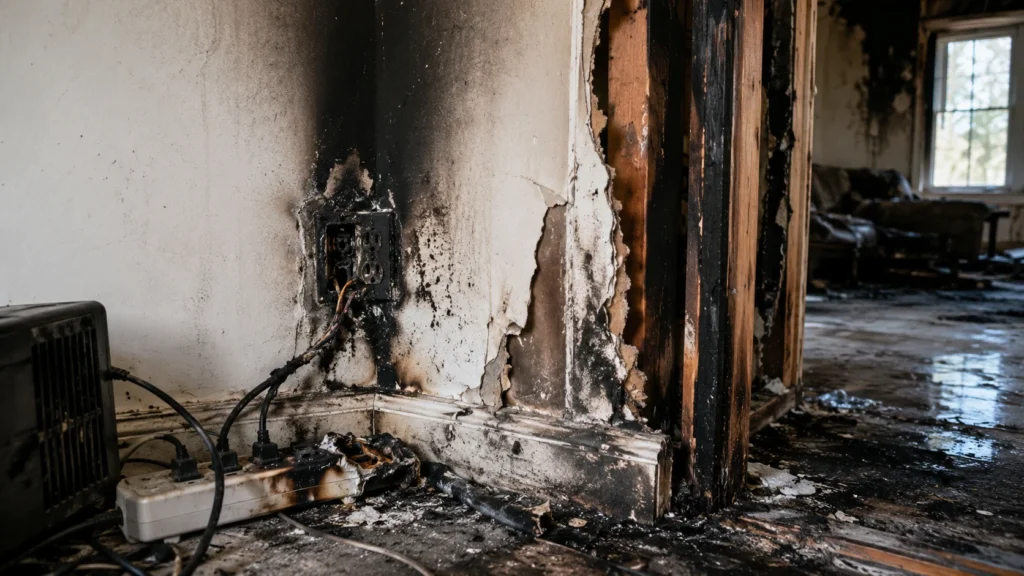
Electrical fires happen fast, but Electrical Fire Insurance Claims can become slow, technical, and frustrating. A single failed wire, outlet, appliance, or breaker can ignite framing, insulation, cabinets, furniture, and personal belongings in minutes. Even when firefighters contain the flames to one room, smoke, soot, water, heat, and corrosive residue may spread through the rest of the property. After the emergency ends, a new problem begins. What should the insurance claim actually include? The answer may go far beyond replacing a burned outlet or repainting one wall. A complete claim can involve electrical testing, structural repairs, smoke remediation, damaged electronics, temporary housing, debris removal, code upgrades, personal property, and business income losses.
That complexity matters because insurers usually investigate the cause, inspect the building, estimate repair costs, and apply the policy’s limits and exclusions. Every stage can create disputes. Damage may be missed, repair methods may differ, and early estimates may not include conditions hidden behind walls or ceilings. For property owners in Hutto, the process can quickly become overwhelming. Electricians, fire investigators, restoration contractors, adjusters, engineers, and contents specialists may all become involved, yet each professional sees only one part of the loss. The goal is not to exaggerate the claim. It is to document the full damage accurately. A strong claim connects every requested payment to physical evidence, policy language, professional findings, and realistic repair costs. Electrical losses are especially difficult because some damage stays hidden. Wiring behind drywall may look normal until the wall is opened. A device may power on after the fire but fail later because soot or moisture reached internal components.
Smoke creates another layer of loss. Residue from burning plastics, insulation, wiring, furniture, and household products can settle on walls, clothing, electronics, ductwork, cabinets, and soft materials far from the fire’s origin. That is why the first insurance estimate should not always be treated as final. It reflects what was visible and documented at that moment. Additional damage may appear during testing, cleaning, demolition, or reconstruction. Understanding When to Hire a Public Adjuster becomes important when the loss is large, the cause is disputed, the insurer’s estimate appears incomplete, or the documentation becomes too time-consuming for the owner to manage alone. Still, no professional can recreate evidence that was destroyed too soon. Do not discard burned appliances, damaged wiring, breakers, power strips, or extension cords before the cause investigation is complete.
The best approach starts with safety, then preservation. Once authorities release the property, document the scene, secure the building, notify the insurer, preserve possible evidence, and begin a written log of every conversation, inspection, payment, and expense. Fire investigators may evaluate burn patterns, wire damage, electrical components, witness statements, photographs, and signs of thermal decomposition, a process in which materials break down when exposed to heat. Their findings may influence both insurance coverage and responsibility for the loss.
What Is an Electrical Fire?
An electrical fire begins when an electrical component, current, or failure becomes the ignition source. Common causes include loose connections, overloaded circuits, damaged outlets, faulty breakers, defective appliances, improper wiring, failed lighting fixtures, battery chargers, and commercial equipment.
The source and the resulting damage are not the same thing. A low-cost outlet can cause tens of thousands of dollars in damage to framing, drywall, flooring, cabinets, wiring, insulation, furniture, and personal property. This distinction often becomes central in Electrical Fire Insurance Claims. A policy may exclude the cost of correcting defective work or replacing the failed component while still covering the fire damage caused by that defect. The outcome depends on the policy wording and the evidence.
Common electrical ignition sources include:
- Aging or damaged wiring
- Loose electrical connections
- Overloaded circuits
- Faulty panels or breakers
- Defective appliances
- Extension cord misuse
- Improper electrical work
- HVAC electrical failures
- Battery and charging equipment
- Lightning and power surges
Never assume the cause based only on the most heavily burned area. Fire may travel through wall cavities, ceilings, ductwork, and combustible materials before causing visible destruction elsewhere.
Are Electrical Fires Covered by Insurance?
Homeowners and commercial property policies commonly cover sudden and accidental fire damage. However, coverage is not determined by the word “fire” alone. The insurer may review the cause, policy status, occupancy, prior electrical problems, maintenance records, permits, renovations, and statements made during the claim. Exclusions can also affect payment.
| Policy provision | Why it matters |
| Fire coverage | Applies to direct physical fire damage |
| Personal property coverage | May cover furniture, clothing, and appliances |
| Additional living expense | May pay increased costs when a home is uninhabitable |
| Business interruption | May apply to lost business income |
| Ordinance or law coverage | Can help with required code upgrades |
| Debris removal | May cover cleanup and disposal |
| Equipment breakdown | May cover certain mechanical or electrical failures |
| Vacancy restrictions | Can limit coverage when a property is vacant |
Coverage may differ between the failed component and the surrounding damage. An insurer might reject the cost of repairing a defective refrigerator but still cover the kitchen fire that followed. Ask for important coverage decisions in writing. A verbal statement from an adjuster is not enough.
Immediate Steps After an Electrical Fire
The hours after a fire are chaotic, but early decisions can shape the claim.
Protect People First
Do not reenter until emergency officials say the property is safe. Even then, exposed wiring, wet electrical systems, unstable ceilings, contaminated air, and hidden hot spots may remain. Do not restore power without professional clearance. A licensed electrician or qualified authority should determine whether the electrical system can be energized safely.
Notify the Insurer
Report the loss promptly and record the claim number, date, representative’s name, instructions, inspection schedule, and emergency repair requirements. Give accurate facts, but do not guess about the cause. Saying “the fire appeared to begin near the electrical panel” is different from declaring that the panel caused it.
Prevent Additional Damage
Most policies require reasonable action to protect the property. This may include boarding openings, covering roof damage, extracting water, installing temporary fencing, or arranging security. Take photographs before temporary repairs whenever it is safe. Keep every receipt, invoice, work authorization, and contractor report.
Preserve the Suspected Source
Do not throw away the appliance, wire, breaker, outlet, charger, or device suspected of starting the fire. Label it and ask the insurer how it should be stored. Evidence preservation is especially important when manufacturers, contractors, landlords, tenants, or utility companies may share responsibility.
Document the Entire Property
Good documentation should show the loss as a connected event. Smoke may move through doorways, attics, wall cavities, ductwork, and utility openings. Water may travel to lower rooms. Start with wide photographs that establish the layout, then take close-ups of specific damage.
Capture:
- Every affected room
- Ceilings, walls, and floors
- Cabinets, doors, and trim
- Electrical panels and outlets
- Appliances and electronics
- HVAC registers and equipment
- Smoke staining and soot deposits
- Wet materials and water lines
- Firefighter access points
- Exterior damage
- Debris before removal
Video can be useful because it shows how rooms connect. Move slowly and describe only what you can observe. Continue documenting as repairs progress. Hidden damage found during demolition may be just as important as what was visible on day one.
Build a Personal Property Inventory
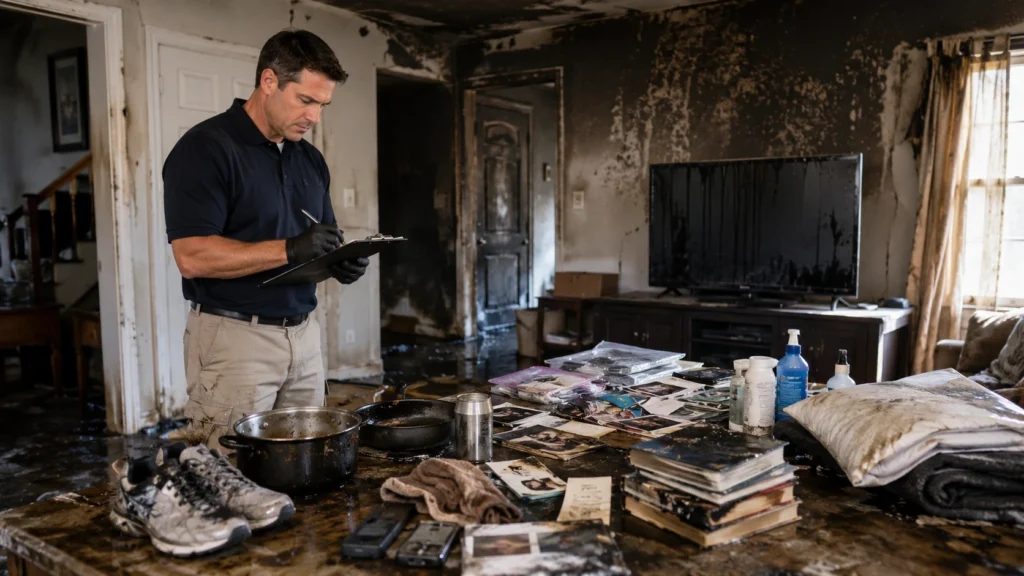
Contents claims become difficult when owners try to remember everything at once. A room-by-room method works better. Start at one wall and move around the room in a consistent direction. Include ordinary items such as curtains, cookware, books, tools, shoes, bedding, cleaning supplies, food, and bathroom products.
| Information | Example |
| Item | 55-inch television |
| Brand and model | Manufacturer and model number |
| Age | Approximately three years |
| Original cost | Amount paid |
| Replacement cost | Current comparable cost |
| Condition | Working before the fire |
| Damage | Soot and water exposure |
| Proof | Receipt, photo, statement, or order history |
Receipts help, but they are not the only proof. Credit card statements, bank records, online purchases, manuals, photographs, warranties, and product packaging can support ownership and value. Describe the damage rather than simply calling everything a total loss. A qualified evaluator can then decide whether cleaning, testing, repair, or replacement is appropriate.
Why the Cause Investigation Matters
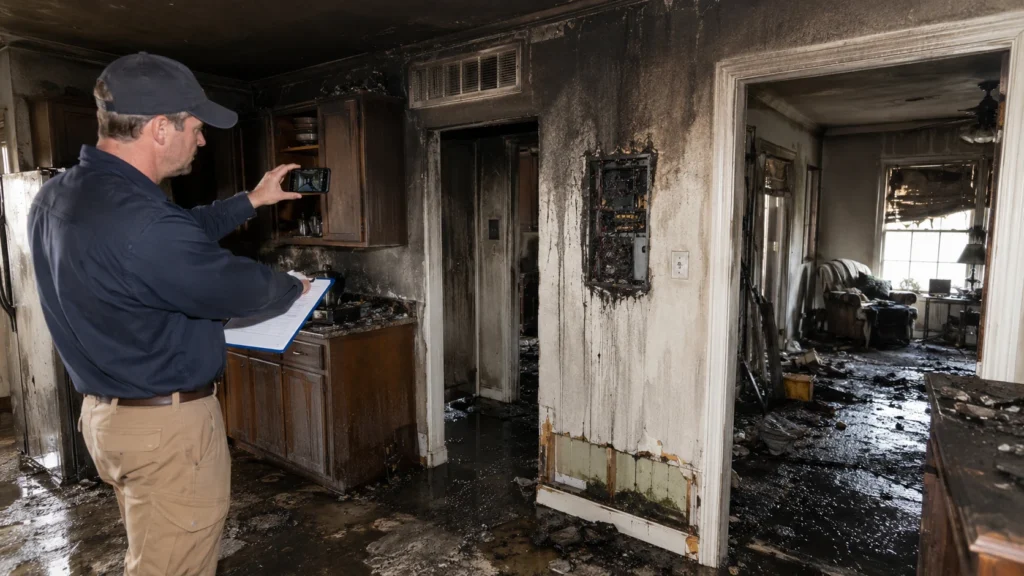
A cause-and-origin investigation attempts to identify where the fire started and what ignited it. The fire department, insurer, engineer, electrician, or independent specialist may participate.
Investigators may examine:
- Burn and heat patterns
- Arc damage
- Breaker condition
- Appliance components
- Wiring routes
- Witness statements
- Alarm records
- Utility information
- Renovation history
- Maintenance records
Their findings may affect coverage and possible recovery from another responsible party. A defective product may create a claim against a manufacturer, while poor installation may involve an electrical contractor. Request copies of available reports. If experts disagree, compare the evidence and assumptions behind their conclusions.
Smoke and Soot Damage
Flames are obvious. Smoke is quieter and often more widespread. Soot can settle on walls, floors, cabinets, clothing, furniture, insulation, electronics, and HVAC equipment. Fine particles may enter closets, drawers, ducts, wall cavities, and equipment housings.
Before cleaning begins, the restoration scope should identify:
- Which surfaces can be cleaned
- Which materials need specialty treatment
- Which porous items retain odor
- Whether insulation must be removed
- Whether HVAC systems are contaminated
- Whether sealing or repainting is necessary
- Which items cannot be restored safely
A quick wipe test is not a complete evaluation. A surface may look cleaner while residue or odor remains inside framing, insulation, ducts, or nearby contents.
Water Damage from Firefighting
Fire suppression often creates a second layer of damage. Water can soak drywall, insulation, flooring, cabinets, furniture, wiring, and personal property, even in areas with little direct flame damage. The water may travel through wall cavities, utility openings, stairwells, and floor assemblies. Lower rooms can suffer substantial damage while upper rooms receive most of the firefighting activity.
Emergency drying should begin quickly once the property is safe. Still, the work must be documented before materials are removed whenever possible. Track moisture readings, drying equipment, affected rooms, demolition areas, and the dates equipment is installed or removed. These records help explain why certain materials could not be saved.
Repair Versus Replacement
This question drives much of the claim value. An insurer may suggest cleaning smoke-damaged drywall, replacing only part of the wiring, refinishing cabinets, or repairing an appliance. A contractor may recommend broader replacement. Neither position should be accepted without reviewing the evidence.
Consider:
- Can the item be restored safely?
- Will the repair meet code?
- Is matching material available?
- Does the manufacturer allow the repair?
- Will warranties remain valid?
- Does access require removing nearby materials?
- Is repair labor more expensive than replacement?
- Can performance be verified?
A short section of damaged wiring may require drywall removal, insulation replacement, painting, testing, permits, and inspections. The wire itself may be inexpensive, while access and restoration cost far more.
Building Codes and Required Upgrades
Older properties may have electrical systems that were legal when installed but no longer meet current requirements. Repairs after a fire can trigger mandatory upgrades.
Possible requirements include:
- Panel replacement
- Service capacity changes
- Arc-fault protection
- Ground-fault protection
- Dedicated circuits
- Updated wiring methods
- Smoke alarm upgrades
- Permit and inspection costs
Ordinance or law coverage may help pay some code-related costs, but limits and exclusions apply. Obtain written documentation showing which upgrades are mandatory and separate them from optional improvements.
Replacement Cost and Actual Cash Value
Replacement cost value generally reflects the cost to repair or replace damaged property with comparable materials, subject to the policy.
Actual cash value usually reflects replacement cost minus depreciation, although definitions vary.
| Calculation | Amount |
| Covered replacement cost | $180,000 |
| Less depreciation | $35,000 |
| Actual cash value | $145,000 |
| Less deductible | $5,000 |
| Initial payment | $140,000 |
| Potential recoverable depreciation | $35,000 |
If depreciation is recoverable, the owner may claim it after completing qualifying repairs and submitting documentation. Deadlines may apply. Review depreciation item by item. Age, condition, useful life, and material type can affect the calculation.
Additional Living Expenses
A home may be uninhabitable because of electrical hazards, smoke contamination, structural damage, missing utilities, demolition, or active construction. Additional living expense coverage may reimburse reasonable increases in normal household costs, including temporary rent, hotel bills, increased meal costs, laundry, storage, furniture rental, pet boarding, and additional transportation.
This coverage generally focuses on the increase over normal spending. If a family usually spends $900 monthly on groceries but spends $1,500 on meals because temporary housing has no kitchen, the relevant increase may be $600. Keep receipts and a simple expense log showing the date, amount, purpose, and payment method. Families displaced in Hutto should ask early about coverage limits, approval procedures, and the expected restoration period.
Why Claims Are Delayed
Some delays are unavoidable. Investigators may need laboratory testing, engineers may need access, and contractors may need demolition before preparing accurate estimates.
Other delays come from incomplete records or weak communication.
Common causes include:
- The fire cause remains unresolved
- Evidence was discarded
- Contractor estimates lack detail
- Experts disagree
- Contents lists remain incomplete
- Code requirements are unclear
- Business income records are missing
- Hidden damage appears later
Create a claim timeline that lists requests, inspections, submissions, payments, and promised response dates.
After important calls, send a written summary.
What Not to Do
Avoid these common mistakes:
- Throwing away suspected electrical components
- Cleaning before documentation
- Authorizing unrestricted demolition
- Restoring power without clearance
- Signing unclear contractor agreements
- Guessing about the cause
- Accepting a settlement without reviewing the scope
- Ignoring temporary expense records
- Allowing deadlines to pass
Read work authorizations carefully, especially clauses involving insurance benefits, storage, disposal, and direct negotiation with the insurer.
Review the Estimate Line by Line
Do not judge the insurer’s estimate only by the final total.
Compare it with photographs, reports, contractor scopes, and actual site conditions. Frequently missed costs include:
- Electrical testing
- Temporary power
- Access to wiring
- HVAC cleaning
- Insulation removal
- Smoke sealing
- Content manipulation
- Debris handling
- Permits
- Code upgrades
- Specialty cleaning
- Final cleaning
Quantities matter as much as categories. An estimate may include drywall replacement but use the wrong square footage. Create a comparison sheet showing the insurer’s amount, contractor’s amount, difference, and supporting explanation.
Challenging an Underpaid Claim
Start by identifying the precise disagreement. Is the insurer disputing coverage, quantity, repair method, depreciation, code work, or replacement?
Then organize the evidence:
- Policy language
- Photographs and video
- Fire and electrical reports
- Contractor estimates
- Testing results
- Invoices
- Personal property records
- Expense documentation
- A written explanation of each change
Submit a clear supplemental claim and request written responses to disputed items. Evidence works better than emotion. A detailed comparison gives the insurer specific issues to evaluate clearly.
Hidden Damage and Supplements
Electrical and smoke damage may remain hidden until walls, ceilings, cabinets, or flooring are removed.
When new damage appears:
- Stop before unnecessary removal
- Photograph it from several angles
- Notify the insurer
- Request reinspection when appropriate
- Obtain a contractor explanation
- Update the estimate
- Preserve relevant materials
A supplement is often a normal part of the claim because early inspections cannot reveal every concealed condition.
How a Public Adjuster May Help
A public adjuster represents the policyholder, not the insurance company. Services may include policy review, damage documentation, estimate preparation, contents organization, supplement presentation, and communication with the insurer.
Help may be useful when:
- Structural damage is extensive
- Smoke affected many rooms
- Several experts are involved
- The contents claim is large
- The estimate appears incomplete
- Code upgrades are disputed
- Business operations were interrupted
- The claim has stalled
A public adjuster does not replace electricians, contractors, engineers, attorneys, or fire investigators. The role is to organize their findings into a clear insurance claim.
Practical Claim Example
Imagine a garage fire that begins near an aging electrical panel. The flames damage the panel, framing, insulation, drywall, stored belongings, and part of the ceiling. Smoke reaches the laundry room, hallway, attic, and HVAC system. Firefighting water damages flooring in two adjoining rooms. The insurer’s first estimate includes panel replacement, limited drywall, basic painting, debris removal, and garage cleaning. The total is $42,000.
Later inspections identify heat-damaged branch wiring, contaminated insulation, smoke residue in adjoining rooms, HVAC testing, water-damaged flooring, added demolition, code upgrades, storage, temporary housing, permits, and inspections. The revised documented scope reaches $96,000. That difference does not automatically prove bad faith. The first estimate may have been prepared before testing and demolition revealed the full loss. However, the owner must document and submit the new conditions.
Electrical Fire Claim Documentation Checklist
Use a simple checklist to keep the claim organized:
- Full insurance policy and endorsements
- Claim number and adjuster contact information
- Fire department report
- Cause-and-origin report
- Electrical inspection report
- Photographs and video
- Emergency service records
- Moisture and drying logs
- Contractor estimates
- Engineering reports
- Permit requirements
- Personal property inventory
- Receipts and purchase records
- Temporary housing expenses
- Storage invoices
- Communication log
- Payment records
- Depreciation calculations
- Business financial records, when applicable
Store digital copies in more than one secure location. Use descriptive file names so important evidence can be found quickly.
Build the Claim Around Evidence
Electrical fire damage rarely stops where the flames stop. Smoke moves, water travels, heat enters concealed spaces, and electrical contamination can remain hidden. Strong Electrical Fire Insurance Claims follow a disciplined process: protect people, preserve evidence, document every affected area, obtain qualified evaluations, compare estimates carefully, and connect each requested cost to the loss.
Do not rush to make the property look normal before its condition is recorded. At the same time, do not allow preventable damage to continue while waiting for inspections. Review the policy early. Track deadlines from the start. Keep important communication in writing. Question unsupported assumptions about cleaning, repair, replacement, and depreciation.
Most importantly, treat every estimate as something that can be checked. Dimensions, quantities, materials, labor, repair methods, code costs, and depreciation can all be compared with evidence. A well-supported claim tells a clear story. It shows what happened, what was damaged, what must be done, how much the work should cost, and which policy provisions apply. That foundation gives the property owner a stronger position when pursuing a fair settlement.
FAQs
Most homeowners policies cover sudden and accidental fire damage, although exclusions, policy limits, and the cause of the fire can affect payment.
The resulting fire damage may be covered even when the policy does not pay to replace the defective wiring itself. Coverage depends on the policy language and investigation findings.
Prioritize safety, notify the insurer, photograph the damage, secure the property, and preserve any appliance or electrical component suspected of causing the fire.
No. Keep damaged appliances, breakers, wiring, outlets, and power strips until investigators and the insurer confirm they are no longer needed as evidence.
Covered fire claims often include reasonable cleaning, restoration, or replacement costs for property damaged by smoke and soot.
Yes. Electronics exposed to heat, smoke, soot, moisture, or firefighting water should be professionally evaluated for cleaning, repair, or replacement.
Additional living expense coverage may pay reasonable increases in housing, meals, storage, transportation, and other costs when the home is uninhabitable.
Initial estimates may omit hidden wiring damage, smoke contamination, water damage, code upgrades, access work, permits, or conditions discovered during demolition.
Yes. A supplemental claim may be submitted when new or concealed damage is discovered, provided it is documented and reported promptly.
Consider professional claim assistance when the loss is extensive, the estimate is incomplete, coverage is disputed, or managing the documentation becomes difficult.