
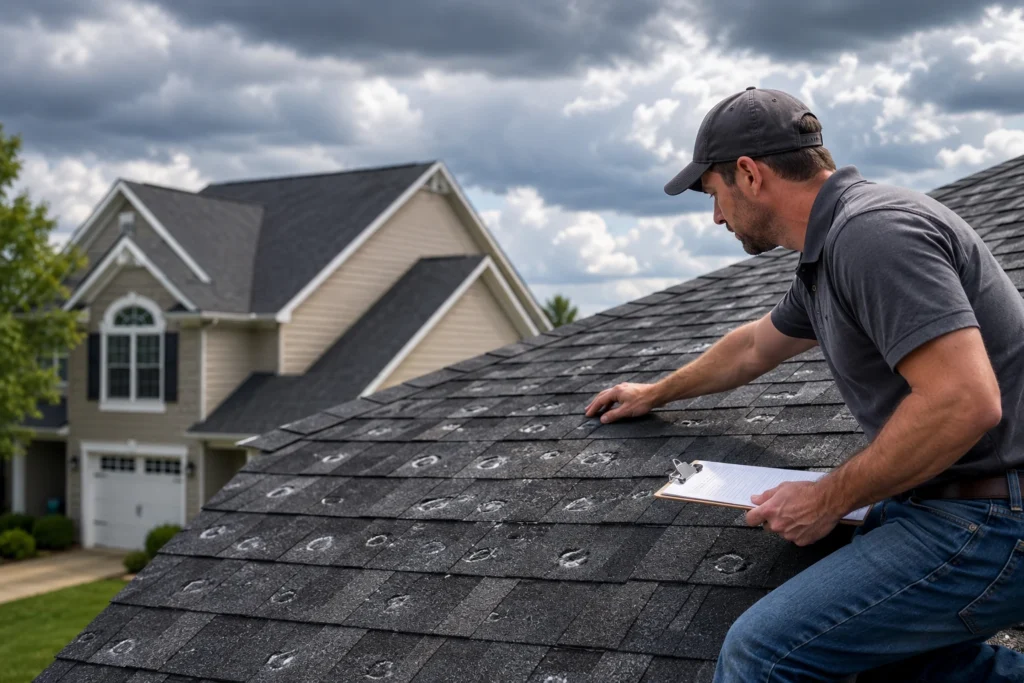
Hailstorms can leave behind obvious dents, fractured shingles, and shattered windows. However, they can also cause hidden damage that is easy to overlook until leaks or structural issues appear weeks later. Understanding how insurance companies evaluate hail damage is one of the best ways to prepare for the claims process and protect your investment. For homeowners in Hutto, where severe Texas storms can develop with little warning, knowing how adjusters inspect a property can make a significant difference in the outcome of a claim. Modern inspections often involve photogrammetry, the science of making accurate measurements from photographs.
Many homeowners assume that visible dents automatically qualify for a roof replacement. Unfortunately, insurance claims are rarely that simple. Insurance companies rely on trained adjusters, weather records, inspection reports, photographs, and policy language before deciding whether damage is covered and how much compensation should be paid. Every hail claim tells a story. The adjuster’s job is to determine whether that story is supported by evidence. They examine not only what was damaged but also how the damage occurred, when it likely happened, and whether the insurance policy provides coverage for those specific losses.
This process can feel overwhelming, especially after a major storm. Between scheduling inspections, documenting damage, speaking with contractors, and reviewing insurance paperwork, homeowners often have many questions. The good news is that understanding the evaluation process makes every step more manageable. Insurance companies are not simply looking for damaged shingles. They evaluate the condition of the entire property, comparing what they observe with weather data and the policy’s terms. Their findings determine whether repairs, partial replacement, or full replacement may be appropriate.
Preparation also plays a significant role. Homeowners who document damage early, save repair records, and understand the inspection process are often in a stronger position when discussing their claim with the insurance company. Many homeowners researching hail claims also look for information about How a Fire Insurance Adjuster Helps You because both types of claims depend on careful documentation, accurate damage assessments, and effective communication throughout the insurance process.
Why Hail Damage Claims Are Closly Investigated
Hail causes billions of dollars in property damage every year across the United States. Roofing systems, siding, gutters, windows, HVAC equipment, and outdoor structures can all suffer significant impacts during a single storm. Because these claims are both frequent and expensive, insurance companies investigate them carefully before approving payment.
Several factors explain why insurers perform detailed inspections:
- Storm claims often involve substantial repair costs.
- Damage can sometimes resemble normal aging.
- Multiple weather events may affect the same property over time.
- Insurance companies must verify that the reported damage occurred during a covered event.
- Policies contain specific coverage terms that adjusters must follow.
This careful review is not necessarily a sign that the claim will be denied. Instead, it reflects the insurer’s responsibility to evaluate the evidence thoroughly before determining coverage. Adjusters are trained to recognize the difference between fresh hail impacts and damage caused by years of exposure to sunlight, wind, or ordinary wear and tear. Although these conditions may appear similar from the ground, they often have distinct characteristics when inspected up close.
Insurance companies also review historical weather information before visiting the property. They frequently know when hail occurred, the estimated size of the hailstones, and which neighborhoods experienced the most severe impacts. This information helps them compare the reported damage with documented storm activity.
What Happens After a Hail Damage Claim Is Filed
The claims process usually begins with a phone call or online claim submission. Once the insurance company receives the report, it opens a claim file and assigns an adjuster to evaluate the property. Although every insurer has its own procedures, most hail claims follow a similar sequence.
| Stage | What Happens |
| Claim Reported | The insurance company collects basic information about the loss. |
| Coverage Review | The policy is reviewed to determine available coverage. |
| Inspection Scheduled | An adjuster contacts the homeowner to arrange an inspection. |
| Property Inspection | Exterior and interior damage are evaluated. |
| Estimate Preparation | Repair costs are calculated using inspection findings. |
| Settlement Review | The insurer determines the amount payable under the policy. |
Each stage depends on the accuracy of the one before it. Missing information or incomplete documentation can slow the process and create unnecessary questions later.
Preparing Before the Adjuster Arrives
A successful inspection often begins before the adjuster ever steps onto the property. Gathering important documents ahead of time allows homeowners to answer questions quickly and provide useful information during the inspection.
Helpful records include:
- Insurance policy information
- Date and approximate time of the storm
- Photographs taken immediately after the hailstorm
- Previous roofing records
- Maintenance receipts
- Contractor inspection reports
- Emergency repair invoices
- Notes describing when damage was first noticed
Organizing these materials in advance also reduces stress. Instead of searching for paperwork during the inspection, homeowners can focus on walking through the property with the adjuster and discussing visible concerns.
How Insurance Adjusters Inspect Hail Damage
Many homeowners imagine the inspection lasting only a few minutes. In reality, experienced adjusters often spend considerable time evaluating each part of the property. They inspect roofing materials, exterior features, and, when necessary, interior spaces that may show signs of water intrusion. The goal is not simply to identify dents or broken shingles. Instead, the adjuster documents the condition of every relevant component while determining whether the observed damage is consistent with the reported hailstorm.
Roof Inspection
The roof usually receives the greatest attention because it absorbs the majority of hail impacts during a storm.
Adjusters carefully inspect:
- Asphalt shingles
- Metal roofing panels
- Ridge caps
- Flashing
- Roof vents
- Skylights
- Chimneys
- Valleys
- Roof penetrations
Each roofing material reacts differently to hail. Asphalt shingles may develop bruises, fractures, or granule loss, while metal roofing often displays dents that vary in severity depending on the size and speed of the hailstones. Clay tile, slate, and composite roofing systems each require their own inspection techniques because the damage patterns are rarely identical.
Rather than relying on a quick visual scan, adjusters frequently examine multiple roof slopes, compare areas with different sun exposure, and photograph suspected hail strikes from several angles. This detailed documentation becomes an important part of the claim file and helps support the estimate prepared after the inspection.
Looking Beyond the Surface
A thorough roof inspection involves much more than counting visible dents. Insurance adjusters evaluate how each impact affects the roofing system’s ability to protect the home. Some marks may look dramatic but have little effect on performance, while others that appear minor can eventually lead to leaks or premature roof failure.
To make that determination, adjusters compare several characteristics, including:
- Size of each impact
- Depth of the indentation
- Shape and consistency of the mark
- Distribution across the roof
- Direction of the hail strikes
- Condition of surrounding roofing materials
Fresh hail damage usually follows a random yet consistent storm pattern. Normal aging, on the other hand, develops gradually over time and often appears uniformly across the roof. Understanding these differences helps adjusters separate storm-related damage from ordinary deterioration.
Inspectors may also use chalk to mark suspected hail impacts before photographing them. These markings help organize the inspection and provide a visual reference when preparing the final report.
Flashing and Roof Accessories
Roof accessories often provide some of the clearest evidence that hail struck the property. Because many of these components are made from metal, they tend to retain visible impact marks longer than asphalt shingles. As a result, adjusters spend considerable time inspecting them.
Common inspection points include:
- Pipe boots
- Metal flashing
- Roof vents
- Turbine vents
- Satellite dish mounts
- Solar panel brackets
- Chimney caps
- Roof exhaust covers
If these components show fresh dents that correspond with other storm damage, they help confirm the overall severity of the hail event. Conversely, if the accessories show little or no evidence of impact, the adjuster may investigate whether other roof markings resulted from different causes.
Signs of Functional Damage
Insurance companies generally focus on functional damage because it affects the roof’s ability to perform as intended.
Examples include:
- Fractured fiberglass matting beneath asphalt shingles
- Torn or punctured roofing membranes
- Broken seal strips
- Cracked roof tiles
- Bent flashing that allows water intrusion
- Exposed fasteners
- Lifted shingles that may be vulnerable to future wind damage
Functional damage often requires repair or replacement because it shortens the life of the roofing system or increases the likelihood of water entering the home.
Exterior Property Inspection
Once the roof inspection is complete, the adjuster continues evaluating the rest of the property. Hail rarely damages only one building component. Instead, it frequently affects multiple exterior surfaces exposed during the storm.
Gutters and Downspouts
Metal gutters are often among the easiest places to identify hail impacts.
Adjusters inspect them for:
- Fresh dents
- Paint fractures
- Impact spacing
- Creases
- Bent sections
- Loose fasteners
The pattern of damage along gutters and downspouts can help determine the direction from which the storm approached.
Siding
Every siding material reacts differently when struck by hail.
During the inspection, adjusters examine:
- Vinyl siding
- Fiber cement siding
- Wood siding
- Metal siding
- Composite materials
They look for chipped edges, cracks, punctures, fractured paint, and surface deformation. While some damage is immediately obvious, subtle fractures may require closer examination under good lighting conditions.
Windows and Screens
Windows receive more attention than many homeowners expect.
Rather than examining only broken glass, adjusters inspect the entire window assembly, including:
- Screens
- Frames
- Trim
- Window seals
- Glazing
- Hardware
Small tears in insect screens may indicate both the size and direction of the hailstones. Damaged window seals can also contribute to moisture problems long after the storm has passed.
Garage Doors
Garage doors provide another excellent reference surface because they present a large, flat area directly exposed to hail.
During the inspection, adjusters evaluate:
- Dent patterns
- Paint damage
- Panel distortion
- Functional operation
- Alignment of moving components
Uniform dents across the garage door often support observations made on the roof and gutters.
HVAC Equipment
Outdoor air-conditioning equipment is another important inspection point.
Adjusters examine:
- Condenser fins
- Protective grilles
- Fan housings
- Refrigerant line covers
- Exterior cabinets
Although small dents may not immediately affect operation, severe impacts can restrict airflow or reduce cooling efficiency. If mechanical damage is suspected, the insurance company may recommend evaluation by a qualified HVAC technician before making a coverage decision.
Interior Inspection
Not every hail claim includes interior damage. However, once hail compromises the roofing system, water intrusion can become a serious secondary problem. For this reason, many adjusters inspect interior spaces after completing the exterior evaluation.
Areas commonly examined include:
- Ceilings
- Walls
- Attics
- Roof decking
- Insulation
- Light fixtures
- Around skylights
- Window frames
Water stains often receive immediate attention, but they are only one piece of the investigation. Adjusters also look for peeling paint, bubbling drywall, warped trim, damp insulation, mold growth, and discoloration that may indicate hidden moisture.
Hidden Damage Can Develop Slowly
One of the challenges with hail damage is that problems are not always immediate. A roof may appear intact after the storm, yet small fractures in shingles or damaged flashing can allow water to enter gradually over the following weeks or months.
Delayed damage may include:
- Ceiling stains
- Wood rot
- Mold growth
- Insulation deterioration
- Damaged drywall
- Electrical concerns caused by moisture
Because these issues develop over time, homeowners should continue monitoring their property after a hailstorm instead of assuming everything is fine simply because no leaks appeared during the first rainfall. Taking photographs immediately after the storm—and again if conditions change—creates a valuable timeline that may help support the claim if additional damage becomes apparent later.
At this stage of the inspection, the insurance adjuster has gathered information from the roof, exterior building components, and interior spaces. The next step is to analyze those findings alongside weather records, construction materials, maintenance history, and policy provisions to determine whether the observed damage qualifies for coverage and, if so, how the loss should be valued.
Factors Insurance Companies Consider During Evaluation
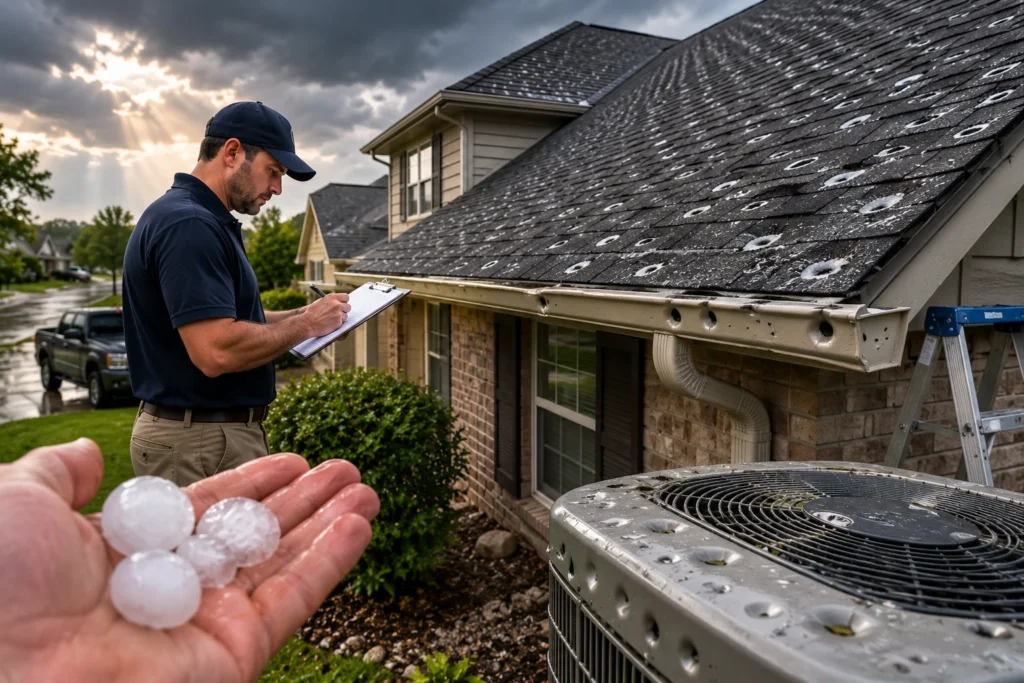
After completing the physical inspection, the insurance company begins analyzing the evidence. This stage is just as important as the inspection itself because adjusters must determine whether the observed damage resulted from the reported hailstorm and whether the policy provides coverage. Several factors influence that decision.
Hail Size
Not all hailstorms produce the same level of damage. Small hailstones may leave only minor cosmetic marks, while larger hail can fracture shingles, dent metal roofing, crack siding, and damage outdoor equipment. Insurance companies compare the reported hail size with the type of damage found on the property. If the inspection reveals severe impacts but weather records indicate only pea-sized hail, the adjuster may investigate further before approving repairs.
Wind Speed and Storm Direction
Wind significantly changes how hail strikes a building. Strong winds increase the force of impact and can concentrate damage on one side of the home. As a result, adjusters often compare different roof slopes and exterior walls to determine whether the damage pattern matches the reported storm.
For example, if the west-facing roof slope has widespread impacts while the east-facing slope remains largely unaffected, the pattern may correspond with the direction of the storm. These observations help confirm whether the damage is consistent with a hail event.
Roof Age
Roof age is another important consideration. A newer roof generally has more resistance to hail than one that has experienced years of exposure to sunlight, temperature changes, and severe weather. However, age alone does not determine whether a claim is covered. Instead, adjusters evaluate whether the hailstorm created new damage or simply revealed existing weaknesses. Even an older roof can qualify for coverage if the storm caused direct physical damage that falls within the policy.
Roofing Material
Every roofing material responds differently to hail impacts.
Common roofing materials include:
| Roofing Material | Typical Hail Response |
| Asphalt shingles | Bruising, fractures, granule loss |
| Metal roofing | Dents, coating damage |
| Clay tile | Cracks or broken sections |
| Slate | Chips or fractures |
| Composite roofing | Surface damage varies by manufacturer |
Understanding these differences allows adjusters to determine whether the observed damage is typical for the roofing system being inspected.
Previous Damage
Insurance companies also review whether the property experienced prior storm damage. If a roof already contained unrepaired hail impacts or wind damage before the reported event, the adjuster must distinguish between old and new damage. Previous inspection reports, repair invoices, and photographs often become valuable during this stage of the evaluation.
Maintenance History
Routine maintenance demonstrates that a homeowner has taken reasonable steps to care for the property.
Records that may support a claim include:
- Roof inspections
- Gutter cleaning receipts
- Roof repair invoices
- Maintenance contracts
- Replacement records
- Annual inspection reports
While a lack of maintenance does not automatically result in a denial, neglected conditions can make it more difficult to determine exactly what damage resulted from the hailstorm.
Evidence Insurance Companies Use
Insurance companies rely on documentation just as much as physical observations. Every piece of evidence contributes to the overall picture of what occurred during the storm.
Inspection Photographs
Photographs remain one of the most valuable forms of evidence.
Adjusters take images of:
- Roofing materials
- Gutters
- Downspouts
- Flashing
- Windows
- Siding
- HVAC equipment
- Fencing
- Interior water damage
These photographs become part of the permanent claim file and may be reviewed multiple times throughout the claims process.
Drone Inspections
Technology has changed the way many hail claims are evaluated. Drones now allow adjusters to inspect steep or difficult-to-access roofs safely while capturing detailed high-resolution images.
Drone inspections provide several advantages:
- Improved safety
- Better roof visibility
- High-quality documentation
- Faster inspections
- Consistent photographic records
Although drones are valuable tools, they do not completely replace hands-on inspections. Many adjusters still climb onto the roof whenever conditions allow.
Weather Reports
Weather records play an essential role in verifying a hail claim.
Insurance companies commonly review:
- Radar imagery
- Storm reports
- Local weather observations
- Hail size estimates
- Wind speeds
- Storm paths
These records help establish whether hail occurred at the reported location and whether the documented damage aligns with the severity of the storm.
Contractor Estimates
Many homeowners obtain independent roofing inspections before or after filing a claim.
Contractor estimates often provide:
- Material quantities
- Labor costs
- Scope of repairs
- Photographs
- Additional observations
Although insurance companies prepare their own estimates, contractor reports sometimes identify damage that deserves additional review.
Engineering Reports
Complex claims occasionally require evaluation by structural or roofing engineers.
Engineering reports may address:
- Structural integrity
- Roofing performance
- Material failure
- Water intrusion pathways
- Cause of damage
These reports provide technical opinions that may assist in resolving disputed claims.
Common Reasons Claims Are Reduced or Denied
Receiving a lower settlement than expected can be frustrating. Fortunately, understanding the most common reasons for reduced payments helps homeowners prepare stronger claims from the beginning. One of the leading reasons is wear and tear. Roofs naturally age over time. Sun exposure, temperature fluctuations, wind, and ordinary weather gradually reduce the life of roofing materials. Insurance policies generally cover sudden storm damage—not deterioration that occurs over many years.
Improper installation can also affect coverage. If shingles were installed incorrectly or flashing was not secured according to manufacturer specifications, the insurance company may determine that certain problems resulted from installation defects rather than hail.
Previous storm damage is another common issue. When earlier damage was never repaired, distinguishing old impacts from new ones becomes much more difficult. Adjusters may compare historical inspection reports, satellite imagery, or previous claims to determine whether the damage predates the current storm. Incomplete documentation can also delay or weaken a claim. Missing photographs, limited repair estimates, or uncertainty about when the damage occurred may create questions that slow the evaluation process.
Finally, policy exclusions should never be overlooked. Every insurance policy contains specific terms explaining what is covered, what is excluded, and what responsibilities belong to the policyholder. Reviewing these provisions early helps avoid misunderstandings later in the claim. I’ll finish the article with the remaining sections and conclusion.
How Depreciation Affects Hail Damage Settlements
One of the most confusing parts of a hail claim is understanding why the insurance payment does not always match the contractor’s estimate. In many cases, the difference comes down to depreciation. Depreciation reflects the reduction in value of a building component due to age, normal use, and expected wear. If a roof is already halfway through its expected lifespan, the insurance company may reduce the initial payment to account for that depreciation, depending on the policy.
The two most common settlement methods are:
| Valuation Method | How It Works |
| Actual Cash Value (ACV) | Pays the depreciated value of the damaged property after subtracting depreciation and the deductible. |
| Replacement Cost Value (RCV) | Pays the cost to replace the damaged property, although recoverable depreciation is often paid after repairs are completed. |
Homeowners with Replacement Cost Value coverage frequently receive an initial payment based on the Actual Cash Value. After repairs are completed and the required documentation is submitted, the insurance company may release the remaining recoverable depreciation. Deductibles also affect the final settlement amount. Regardless of the valuation method, the deductible is generally subtracted from the covered loss before payment is issued. Understanding these provisions before beginning repairs helps homeowners avoid unexpected financial surprises.
Why Different Adjusters May Reach Different Conclusions
Many homeowners are surprised when two professionals inspect the same property and reach different opinions. This happens more often than people realize. Although insurance adjusters follow established procedures, evaluating hail damage still involves professional judgment. Small differences in interpretation can lead to different repair recommendations.
Several factors contribute to these differences:
- Experience with hail claims
- Inspection techniques
- Quality of available documentation
- Accessibility of damaged areas
- Interpretation of policy language
- Differences in estimating software
For example, one adjuster may determine that damaged shingles can be repaired individually, while another concludes that the roof requires replacement because matching materials are unavailable or widespread functional damage exists. Additional photographs, contractor reports, or engineering opinions sometimes help resolve these differences.
Mistakes Homeowners Should Avoid After a Hailstorm
The actions taken immediately after a hailstorm can influence the success of an insurance claim. Avoiding common mistakes helps preserve valuable evidence and reduces unnecessary complications.
Some of the most common errors include:
- Waiting too long to report damage
- Throwing away damaged materials before documentation
- Making permanent repairs before the inspection
- Ignoring small leaks
- Accepting the first settlement without reviewing the estimate
- Failing to obtain an independent roofing inspection
- Losing receipts for emergency repairs
Instead, document everything carefully. Take photographs from multiple angles, record videos if possible, and create written notes describing when the damage was first observed. If emergency repairs are necessary to prevent additional damage, keep all invoices and receipts for reimbursement consideration. Remaining organized throughout the process often makes communication with the insurance company much easier.
How to Strengthen a Hail Damage Insurance Claim
A well-documented claim is usually easier to evaluate than one supported only by verbal descriptions. There are several practical steps homeowners can take to strengthen their claim. Start by documenting the property as soon as it is safe.
Helpful actions include:
- Photograph every damaged area.
- Capture both close-up and wide-angle images.
- Save local weather alerts and storm notifications.
- Request a professional roof inspection.
- Obtain detailed written repair estimates.
- Keep copies of emails and letters from the insurance company.
- Maintain receipts for temporary repairs.
- Create a timeline showing when damage was discovered and reported.
It is also helpful to compare the insurance estimate with a contractor’s estimate. Differences do not automatically indicate that either estimate is wrong, but they may highlight repair items that deserve additional discussion. Keeping all claim documents together in one folder whether digital or printed makes it much easier to locate information if questions arise later.
Functional Damage vs. Cosmetic Damage
One of the most important distinctions in a hail claim is whether the damage is considered functional or cosmetic. Functional damage affects how a building component performs. Examples include fractured shingles, punctured roofing materials, broken flashing, cracked roof tiles, or damage that allows water to enter the structure. Because these conditions reduce the roof’s ability to protect the home, they often receive greater attention during the evaluation process. Cosmetic damage, on the other hand, changes appearance without significantly affecting performance.
Examples may include:
- Minor dents in metal gutters
- Small marks on garage doors
- Surface blemishes on metal roofing
- Paint imperfections caused by hail
Some insurance policies limit or exclude coverage for cosmetic damage. For that reason, homeowners should understand how their individual policy defines covered damage before assuming that every visible mark will qualify for payment.
Using Weather Data to Support a Claim
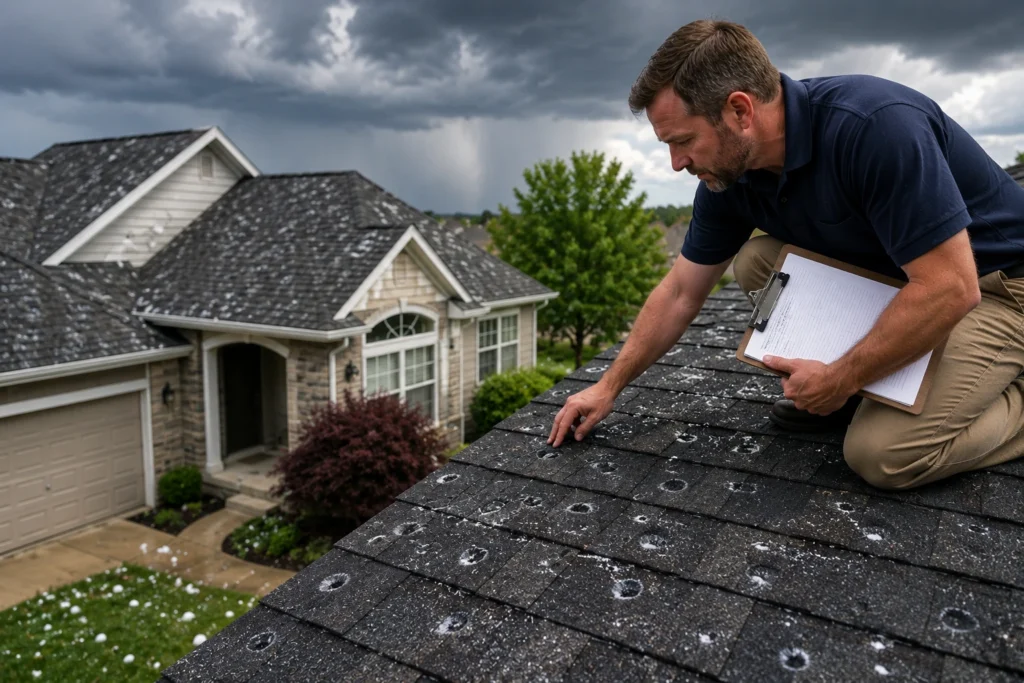
Visual evidence tells only part of the story. Insurance companies also compare inspection findings with verified weather information to determine whether the reported damage is consistent with the storm.
Helpful weather information includes:
- Date and time of the storm
- Estimated hail size
- Wind speed
- Radar imagery
- Local storm reports
- National weather databases
When weather records align with the observed damage, they help reinforce the claim. Homeowners can further support their documentation by saving severe weather alerts, local news reports, and photographs taken immediately after the storm.
The Importance of a Complete Repair Estimate
A repair estimate should do far more than provide a total price. It should explain exactly what work is required to restore the property.
A comprehensive estimate generally includes:
| Estimate Item | Purpose |
| Material quantities | Defines the scope of replacement |
| Labor costs | Explains installation expenses |
| Equipment requirements | Accounts for specialized tools |
| Debris removal | Covers disposal of damaged materials |
| Taxes and fees | Reflects the total project cost |
Reviewing each line item carefully allows homeowners to compare the contractor’s estimate with the insurance company’s estimate and identify any missing repair items before work begins.
When to Seek Help From a Public Adjuster
Many hail claims are resolved without major disagreements. However, some claims become far more complicated.
Professional assistance may be beneficial when:
- A claim has been denied.
- The settlement appears significantly lower than repair estimates.
- Multiple parts of the property sustained damage.
- The claim involves extensive documentation.
- Negotiations with the insurance company have stalled.
A public adjuster represents the policyholder rather than the insurance company. Their role is to document losses, review policy language, organize supporting evidence, and negotiate for a fair settlement based on the facts of the claim. For homeowners in Hutto, this additional support can be particularly valuable after widespread hailstorms affect entire neighborhoods. Large storm events often result in hundreds of simultaneous claims, making careful documentation and thorough claim preparation especially important.
Conclusion
Understanding how insurance companies evaluate hail damage empowers homeowners to make informed decisions before, during, and after the claims process. Every inspection involves much more than looking for dents on a roof. Adjusters evaluate roofing materials, siding, gutters, windows, HVAC equipment, interior spaces, weather records, maintenance history, photographs, and policy language before determining coverage. Preparation remains one of the most effective ways to improve the outcome of a claim. Taking photographs immediately after the storm, preserving receipts, obtaining qualified inspections, and organizing documentation all contribute to a stronger, more accurate claim.
If questions arise or the settlement appears incomplete, reviewing the estimate carefully and seeking knowledgeable guidance may help resolve outstanding issues. For property owners in Hutto, being proactive after severe weather can reduce delays, strengthen documentation, and improve communication throughout the insurance process. Ultimately, understanding how insurance companies evaluate hail damage gives homeowners greater confidence when navigating one of the most important financial protections they have. With solid evidence, careful preparation, and a clear understanding of the claims process, homeowners are better positioned to pursue the coverage their insurance policy is intended to provide.
FAQs
An adjuster inspects the roof, siding, gutters, windows, HVAC equipment, and interior for evidence of storm-related damage.
The deadline depends on your insurance policy and state laws, so report the damage as soon as possible after the storm.
Yes. Hail can cause bruised shingles, damaged flashing, or weakened roofing materials that may not be visible from the ground.
It depends on the extent of the damage, your policy coverage, and whether repairs or replacement are considered necessary.
Cosmetic damage affects appearance, while functional damage impacts the performance or lifespan of the roofing system or other property components.
A professional inspection can identify damage that may not be obvious and provide documentation to support your insurance claim.
Claims may be denied due to policy exclusions, insufficient evidence, wear and tear, improper maintenance, or damage unrelated to the reported storm.
Yes. Roof age may influence how the insurer evaluates the damage and calculates depreciation, but it does not automatically prevent coverage.
Yes. If you believe the estimate is inaccurate or incomplete, you can provide additional evidence, request a reinspection, or seek professional assistance.
Document the damage immediately, keep detailed records, obtain a professional inspection, and review the insurance estimate carefully before accepting a settlement.