
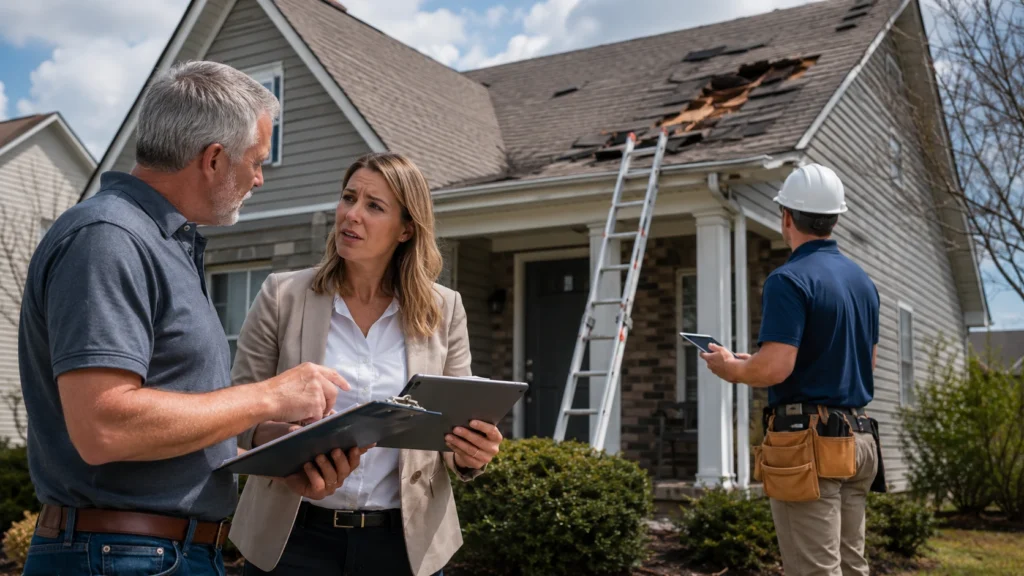
What happens if you delay a roof claim after hail, wind, or falling debris damages your home? Waiting does not always lead to an automatic denial, but it can make the claim much harder to prove. Evidence fades. Leaks spread. Repair costs rise. Meanwhile, the insurance company may question when the damage occurred, what caused it, and whether you took reasonable steps to protect the property. For homeowners in Hutto, reporting and documenting suspected roof damage promptly can protect both the home and the insurance claim.
Many homeowners wait because the roof still appears intact from the ground. That reaction is understandable. Roof damage is not always dramatic, and a house does not need missing sections or water pouring through the ceiling to have a serious problem. Hail can fracture shingles without causing an immediate leak, while strong wind may loosen materials that remain in place until another storm arrives.
Others delay because they fear filing an unnecessary claim. They may worry that the damage will not exceed the deductible, that the claim will become stressful, or that the insurer will reject it. Some simply decide to monitor the roof. Unfortunately, storm damage rarely becomes easier to identify, document, or repair as time passes. A delay can begin innocently. A homeowner notices a small ceiling stain but assumes it came from condensation. Several weeks later, the stain spreads. By the time a roofing contractor inspects the property, more rain has fallen, shingles have shifted, and moisture has entered the attic. The original storm damage may still be present, but separating it from later deterioration now requires more investigation.
Insurance claims depend heavily on timing, evidence, and cause. The insurer must determine what happened, when it happened, whether the policy covered the event, and how much damage resulted. The longer a homeowner waits, the more difficult it may become to provide clear answers. That does not mean every delayed roof claim will be denied. A late claim may still be valid, especially when the damage was hidden or could not reasonably have been discovered earlier. However, the homeowner may need stronger records, a detailed timeline, professional inspection findings, and a credible explanation for the delay.
The safest approach is straightforward: document suspected damage, prevent it from getting worse, review the policy, and report the loss within the required timeframe. Reporting damage does not force you to accept the insurer’s estimate or begin permanent repairs immediately. It creates a record and allows the investigation to start. Water can travel through roofing materials, decking, insulation, wall cavities, and interior finishes before a homeowner sees a stain. The study of hydrology focuses on the movement and distribution of water, and the same basic idea applies inside a damaged home. Moisture may enter through one roof opening and appear several feet away, making the source difficult to locate without a careful inspection.
Once water enters, the problem may no longer be limited to shingles. Wet insulation can lose effectiveness. Roof decking may swell or weaken. Fasteners can corrode. Drywall may stain, soften, or collapse. Persistent moisture can also create conditions that support mold growth. The issue is not merely how long you waited. The insurer may consider whether the delay affected its ability to inspect the original damage, determine the cause, or limit the amount of additional loss. That distinction often becomes central during a late-reported claim.
Understanding When to Hire a Public Adjuster may become relevant when a delayed claim involves disputed storm dates, overlapping weather events, missing documentation, or a large difference between the insurer’s estimate and the contractor’s proposed repair scope. Professional claim assistance is not required for every loss, but complicated claims may benefit from organized documentation and detailed policy review.
What Is a Roof Insurance Claim?
A roof insurance claim is a formal request asking an insurance company to evaluate property damage under an active policy. The claim may involve shingles, metal panels, flashing, vents, gutters, decking, insulation, ceilings, walls, flooring, or personal property affected by water intrusion. Filing a claim does not guarantee payment. The insurer must determine whether the cause of loss is covered. It must also evaluate the roof’s condition, the extent of the damage, applicable deductibles, exclusions, depreciation, repair costs, and policy limits.
Several professionals may participate:
- The policyholder reports the loss and provides supporting information.
- The insurance adjuster evaluates the claim for the carrier.
- The roofing contractor determines the work needed to repair the roof.
- An engineer may inspect disputed structural or material conditions.
- A public adjuster may assist the policyholder with claim preparation.
These roles are different. A contractor focuses on construction. An insurance adjuster evaluates the loss for the carrier. A public adjuster represents the policyholder. Understanding those distinctions can prevent confusion during the claim.
What Happens If You Delay a Roof Claim?
What happens if you delay a roof claim depends on the policy, the length of the delay, the reason for waiting, and whether the insurer can still investigate the original event.
The insurance company may question whether the reported storm caused the damage. It might argue that the roof condition resulted from age, normal wear, poor installation, lack of maintenance, or a later weather event. Even when storm damage exists, months of exposure can blur the difference between the original loss and subsequent deterioration. The insurer may also state that it was not given a reasonable opportunity to inspect the roof before conditions changed. Roofing materials may have been removed, debris discarded, impact marks covered, or another storm may have affected the same area.
A delay can create several connected problems:
| Potential issue | Why it matters |
| Lost evidence | The original roof condition may no longer be visible |
| Cause dispute | The insurer may question which event caused the damage |
| Additional deterioration | Water and exposure may increase the repair scope |
| Deadline problems | Policy reporting requirements may expire |
| Mitigation dispute | The insurer may challenge preventable additional damage |
| Higher repair costs | A minor repair can grow into extensive construction |
| Reduced payment | Later damage may not be included in the covered loss |
| Claim denial | The insurer may rely on policy conditions or exclusions |
Insurance Policies Often Require Prompt Notice
Most property policies require the policyholder to provide prompt or timely notice of a loss. The precise wording matters.
“Prompt” does not always mean the same number of days. A homeowner who sees a tree puncture the roof immediately is in a different position from someone who discovers hidden hail damage months later. Still, once damage is known or reasonably suspected, continued delay becomes harder to explain. Prompt notice gives the insurance company an opportunity to inspect while evidence is fresh. The adjuster can examine impact marks, displaced materials, moisture patterns, debris, and temporary repairs before those conditions change.
Policies may also establish separate requirements for:
- Reporting the loss
- Providing a proof of loss
- Cooperating with inspections
- Producing requested documents
- Filing a supplemental claim
- Requesting appraisal
- Beginning legal action
Do not assume these deadlines are identical. Review the complete policy and all endorsements. Then create a deadline sheet that records the date of loss, discovery date, reporting date, claim number, inspections, document requests, and response deadlines.
The Cause May Become Harder to Prove
Insurance coverage usually depends on what caused the damage, not simply whether the roof needs work. A policy may cover sudden hail or wind damage while excluding deterioration caused by age, rot, poor installation, insects, or long-term leakage. When a claim is reported quickly, the adjuster can evaluate the property close to its post-storm condition.
After several months, the roof may look different. Sun exposure can age damaged materials. Wind may lift loose shingles. Rain can wash away debris. Contractors may apply sealant or perform patches. Interior stains may be painted. Each change can make the original cause less obvious. Suppose hail strikes a ten-year-old asphalt roof. The impacts fracture several shingles, but no leak appears immediately. Months later, temperature changes loosen the damaged areas, and water begins entering beneath the roof covering.
The insurer may then ask:
- Did hail create the fractures?
- Were the marks caused by wear?
- Did a later storm loosen the shingles?
- Was the roof already leaking?
- Could earlier action have prevented the interior damage?
These questions do not automatically defeat the claim. They show why early documentation matters.
Roof Damage Can Become Much Worse
A roof is a connected system. A small problem in one layer can eventually affect several parts of the home. A lifted shingle may initially expose only a small section of underlayment. Another storm can tear the shingle away. Water may then reach the decking, travel along a rafter, soak the insulation, and stain a ceiling far from the original opening.
The first repair might have involved replacing a limited section of roofing. The later repair may require new shingles, decking, insulation, drywall, paint, and electrical inspection.
| Initial condition | Possible result of delay |
| Cracked shingle | Water reaches the underlayment |
| Loose flashing | Moisture enters around a chimney or wall |
| Minor puncture | Decking and insulation become saturated |
| Damaged vent boot | Water travels along plumbing lines |
| Open ridge cap | Wind-driven rain enters the attic |
| Damaged gutter | Water affects fascia and soffits |
The original storm damage might be covered, while some later damage may be disputed if the insurer believes reasonable temporary action could have limited it.
Your Duty to Protect the Property
Insurance policies generally expect homeowners to take reasonable steps to prevent additional damage after a loss. That does not mean climbing onto a wet, steep, or unstable roof. Safety comes first. It means arranging appropriate temporary protection when conditions allow.
Reasonable measures may include:
- Placing a tarp over an opening
- Moving belongings away from a leak
- Catching dripping water
- Removing standing water
- Boarding a damaged opening
- Using a contractor for temporary sealing
- Running safe drying equipment
Photograph the damage before temporary work begins whenever possible. Then photograph the completed protection. Keep invoices, receipts, work orders, and the contractor’s written explanation. Avoid major permanent repairs before the insurer has had a reasonable opportunity to inspect, unless waiting would create a safety hazard or allow serious additional damage. When immediate work is necessary, explain the urgency in writing and preserve as much evidence as possible.
Evidence Can Disappear
A roof claim is easier to evaluate when it includes evidence created close to the date of loss. Take wide photographs showing the full roof plane, medium-range images of affected sections, and close-ups of individual damage. Include gutters, siding, fences, windows, outdoor equipment, and other surfaces that may show hail or wind effects.
Inside the property, photograph:
- Ceiling stains
- Bubbling paint
- Wet drywall
- Attic water trails
- Damaged insulation
- Warped trim
- Damp flooring
- Affected belongings
Save local weather alerts, dated videos, contractor reports, inspection notes, receipts, emails, and repair proposals.
Create a written timeline while events are fresh. It should answer:
- When did the storm occur?
- When was the damage discovered?
- What temporary work was completed?
- When was the insurer notified?
- Who inspected or repaired the property?
Store everything in one digital folder. Use filenames with dates and descriptions instead of generic camera numbers.
Permanent Repairs Can Remove Important Evidence
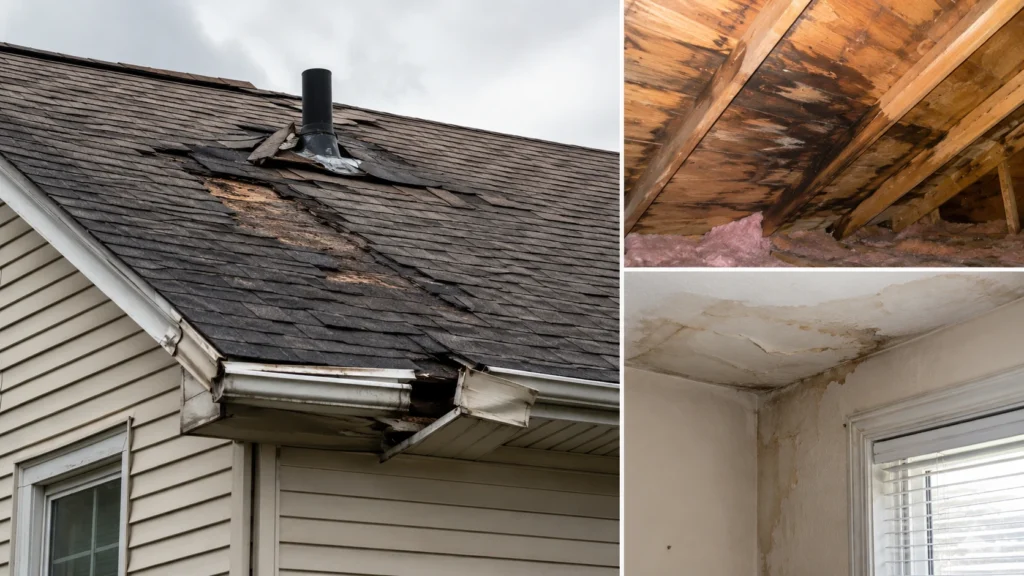
Emergency protection and permanent reconstruction are not the same. A tarp may protect the home while leaving much of the underlying condition available for inspection. A complete roof replacement removes materials that an adjuster, engineer, or other professional may need to examine.
Sometimes permanent repairs cannot wait. The building may be unsafe, or continued rain may threaten major interior damage. In those situations, document the roof thoroughly before materials are removed.
Ask the contractor to:
- Photograph every affected area
- Record videos before demolition
- Identify damaged components in writing
- Save representative material samples
- Provide measurements and an itemized estimate
- Keep disposal and delivery records
- Explain why immediate work was necessary
Do not discard damaged materials without documenting them. Ask the insurer whether specific items should be retained.
You May Miss a Filing Deadline
One serious answer to what happens if you delay a roof claim is that a contractual deadline may pass. Some policies establish a specific period for reporting storm damage. Others use broader prompt-notice language. Additional deadlines may apply to proofs of loss, supplemental requests, appraisals, or legal proceedings.
Do not rely on a neighbor’s claim experience. Their insurer, policy, endorsements, deductible, and loss date may differ from yours. Read every letter from the insurance company carefully. A routine-looking notice may request documents, schedule an inspection, reserve rights, or identify a deadline. Record the date received and respond in writing. Whenever a deadline is unclear, ask the carrier to identify the applicable policy provision. Written communication creates a stronger record than an informal phone conversation.
Multiple Storms Can Create a Date-of-Loss Dispute
Central Texas may experience several hail or wind events in a relatively short period. Delayed reporting can therefore create uncertainty about which storm caused the damage. Imagine that a storm affects the roof in March. No inspection occurs. Another storm arrives in May, followed by heavy rain in June. The homeowner reports the claim after discovering a ceiling stain in July.
Which event created the opening? The answer may affect the deductible, policy period, coverage decision, and repair estimate. It could even determine which insurer handles the claim if the homeowner changed carriers.
A delayed claim near Hutto may require weather records, earlier photographs, prior inspection reports, maintenance invoices, and a professional evaluation. Weather data can show that hail or strong wind occurred nearby, but property-specific evidence remains important. Never select a date of loss simply because it is convenient. Use the most accurate information available. When the exact date is uncertain, explain what is known and when the damage was discovered.
Roof Age Can Complicate the Claim
Older roofs can still suffer covered storm damage. Age alone does not prove that hail or wind caused no harm. However, an aging roof may already have brittle shingles, granule loss, worn flashing, previous repairs, or deteriorated sealant. Those conditions can make new damage harder to separate from existing wear.
The insurer may distinguish among:
- Direct storm damage
- Pre-existing deterioration
- Cosmetic conditions
- Installation defects
- Maintenance problems
- Resulting interior damage
Depreciation may also affect payment. An actual cash value calculation generally accounts for age and condition. Replacement cost coverage may allow some withheld depreciation to be recovered after covered repairs are completed, depending on the policy. Review the estimate carefully. Identify the replacement cost, depreciation, deductible, initial payment, and any recoverable amount.
A Delayed Claim May Be Reduced or Denied
Common reasons insurers may cite include:
- The claim was not reported promptly.
- The roof shows wear rather than storm damage.
- Damage existed before the policy period.
- Repairs removed important evidence.
- The homeowner failed to limit additional damage.
- Long-term leakage caused the interior loss.
- The reported weather event did not affect the property.
- A policy exclusion applies.
- A filing requirement was missed.
Read the denial letter together with the cited policy language. A general statement that the roof is old is not the same as a detailed explanation connecting observed conditions to a specific exclusion. Compare the coverage decision with the inspection evidence. Determine whether every roof plane was examined, whether interior areas were inspected, and whether the insurer considered contractor reports and photographs. A disagreement does not automatically mean either side acted improperly. Roof claims often involve differences in professional judgment. The most productive response is to identify the exact dispute and provide evidence that addresses it.
How Long Is Too Long?
There is no universal waiting period for every roof claim.
A delay of several days may be reasonable while the property is secured and an inspection is arranged. A delay of several months may require a stronger explanation. Waiting beyond a clear policy deadline creates a much more serious issue.
Important factors include:
- When the storm occurred
- When the damage became visible
- Whether it should have been discovered sooner
- Whether active leakage existed
- Whether temporary protection was installed
- Whether the investigation was affected
- Whether repairs changed the evidence
- What the policy requires
The practical rule is to act as soon as you know, or reasonably suspect, that covered damage may have occurred. You do not need a complete repair estimate before notifying the carrier. Report the facts you know and continue gathering information.
What If the Damage Was Hidden?
Roof damage may remain concealed for weeks or months. Hail can weaken shingles without creating an immediate opening. Wind can break a seal while leaving the shingle flat. Flashing may shift and leak only when rain blows from a certain direction.
When hidden damage is discovered, record:
- The date the first sign appeared
- Who noticed it
- What was observed
- Recent weather conditions
- Whether the attic was inspected
- Whether earlier stains existed
- When a contractor was contacted
- What the contractor found
Photograph the condition immediately. Do not paint, patch, clean, or discard materials before documenting them. Be honest about uncertainty. A truthful explanation that a stain appeared after later rainfall is more credible than pretending to know details that cannot be confirmed.
What to Do When the Storm Happened Months Ago
Do not automatically assume the claim is impossible. First, obtain the complete policy in effect on the suspected loss date. Review the notice requirements, deductibles, exclusions, roof-payment endorsements, and deadlines. Next, arrange a thorough roof and attic inspection. Request a written report that separates possible storm damage from aging, maintenance, and prior repairs.
Then collect:
- Dated photographs
- Weather alerts
- Prior inspection reports
- Maintenance invoices
- Roofing warranties
- Contractor estimates
- Temporary repair receipts
- Interior repair records
- Communications with the insurer
Report the loss accurately. Explain when the damage was discovered and why it was not reported earlier. Avoid guessing or inventing a date.
Build a Clear Claim Timeline
A timeline turns scattered records into an understandable sequence.
| Timeline entry | Details to record |
| Suspected storm | Date, time, and weather type |
| Initial observations | Hail, wind, debris, or neighborhood damage |
| Discovery | Date the roof issue or stain was noticed |
| Emergency action | Tarping, drying, or temporary sealing |
| Inspection | Inspector, company, date, and findings |
| Claim notice | Reporting date and claim number |
| Insurer visit | Date and areas inspected |
| Estimates | Contractor and insurer amounts |
| Repairs | Work completed and materials retained |
Keep the timeline factual. When information is unknown, mark it as unknown rather than filling the gap with assumptions.
Should You Repair Before Filing?
Emergency repairs may be necessary. A full replacement usually requires more caution. When water is entering the property, take reasonable action to stop it. There is no benefit in preserving evidence while preventable damage spreads. Still, emergency work should be limited to what is necessary whenever possible. Before permanent repairs, notify the insurer and request an inspection. Confirm the request in writing. When waiting would cause additional loss, document the urgency and ask the contractor to preserve evidence.
Review construction agreements carefully. Understand the payment obligations, cancellation terms, materials, and authorization language before signing. Never permit anyone to create or exaggerate damage to improve a claim. False documentation or intentional damage can create severe legal and financial consequences.
How a Public Adjuster May Help
A public adjuster represents the policyholder during claim preparation and negotiation. The public adjuster does not repair the roof or make the insurer’s final coverage decision.
Services may include:
- Reviewing policy provisions
- Organizing the loss timeline
- Documenting roof and interior damage
- Preparing repair estimates
- Comparing competing scopes
- Communicating with the insurer
- Attending inspections
- Presenting supplemental information
- Addressing depreciation or measurement issues
A delayed claim may require extra investigation, including weather history, earlier photographs, maintenance records, previous claims, contractor reports, and the reason notice was delayed.
Before hiring a public adjuster, verify licensing, read the agreement, understand the fee, and ask what services will be provided. Avoid anyone who guarantees a specific payment.
Common Mistakes to Avoid
Several mistakes can make a delayed claim harder:
- Waiting for an interior leak before inspecting the roof
- Failing to photograph temporary repairs
- Throwing away damaged materials
- Guessing at the storm date
- Giving conflicting descriptions
- Painting over stains too quickly
- Ignoring insurer requests
- Missing inspections
- Relying only on phone calls
- Accepting vague estimates without measurements
Organization matters. A claim supported by labeled photographs, dated invoices, and a clear timeline is easier to evaluate than scattered screenshots and incomplete notes.
A Practical Example
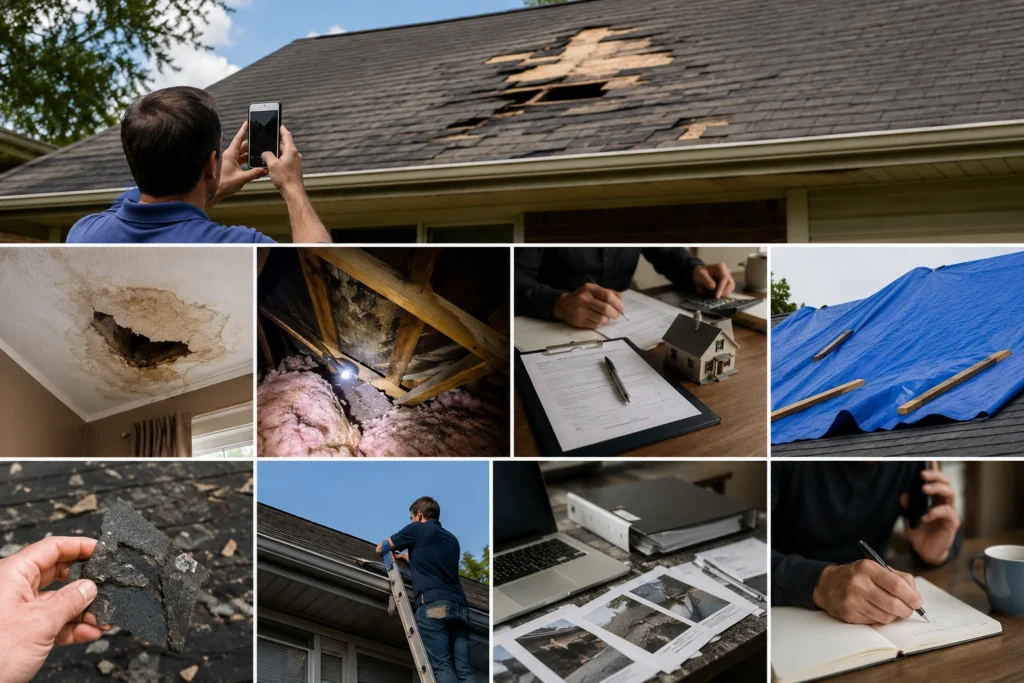
Consider a homeowner whose neighborhood experiences hail in April. The homeowner checks the yard but sees no obvious roof damage, so no inspection is scheduled. In June, a bedroom ceiling develops a faint stain after heavy rain. The homeowner watches it. By August, the stain has widened, and the paint begins to bubble. A contractor finds fractured shingles, damaged ridge caps, and moisture near a roof penetration. The contractor believes hail contributed, but the roof also shows age-related wear.
The claim is now more complicated. The insurer must determine whether the April storm caused the fractures, whether later rain created separate damage, whether the roof penetration leaked previously, and whether earlier action could have limited the interior loss. Useful evidence may include neighborhood storm photographs, doorbell-camera footage, earlier inspection images, attic photographs, maintenance invoices, and a detailed contractor report. The lesson is simple. Time adds questions.
Steps to Take Immediately
After discovering suspected roof damage:
- Protect people from unstable ceilings, electricity, and standing water.
- Photograph exterior, attic, and interior conditions.
- Arrange reasonable temporary protection.
- Save damaged materials.
- Review the policy and deadlines.
- Notify the insurer accurately.
- Schedule a qualified inspection.
- Organize photographs, reports, receipts, and emails.
- Confirm important phone conversations in writing.
- Track every request and deadline.
These steps do not guarantee coverage, but they create a clearer record and reduce avoidable disputes.
Can a Denied Claim Be Reconsidered?
Sometimes. Available options depend on the denial reason, evidence, policy language, and deadlines. Start by identifying the insurer’s exact position. A denial based on late notice requires a different response from one based on wear and tear. Gather evidence that directly addresses the stated reason. Earlier photographs may show the pre-loss condition. Weather information may support the reported event. Contractor measurements may identify omitted work. Maintenance records may respond to allegations of neglect.
Ask whether the insurer will review supplemental information or perform another inspection. Keep the request focused and professional. Depending on the dispute, other options may include appraisal, mediation, a regulatory complaint, public adjuster assistance, or legal review. The appropriate path depends on whether the disagreement concerns coverage, cause, or the amount of loss.
Final Thoughts
What happens if you delay a roof claim often comes down to evidence. The longer the gap between the storm, discovery, inspection, and report, the more opportunities there are for materials to change and competing causes to emerge. Move quickly, but stay organized. Photograph the damage. Protect the property. Review the policy. Preserve materials. Report accurate facts. Keep every receipt and communication.
For Hutto homeowners, storm damage may not be visible from the driveway. A professional inspection after significant hail or wind can identify problems before they develop into expensive interior repairs. Waiting does not automatically destroy a roof claim. Still, it can turn a straightforward inspection into a complicated investigation. Act while the evidence is fresh, the damage is limited, and the timeline is clear.
FAQs
Delaying a roof claim can make it harder to prove when and how the damage occurred. It may also lead to disputes over deadlines, additional damage, or lost evidence.
Yes, an insurer may deny a claim if the delay violated policy requirements or prevented a proper investigation. However, delayed claims are not automatically denied.
Roof damage should generally be reported as soon as it is discovered or reasonably suspected. Always review your policy for specific notice requirements.
Hidden damage may not become visible until a later rainstorm or leak. Document the discovery date and explain why the problem was not noticed earlier.
Yes, reasonable emergency repairs can help prevent additional damage. Photograph the area before and after the work, and keep all receipts.
A full replacement before the insurer inspects may remove important evidence. Notify the carrier first unless immediate repairs are necessary for safety or property protection.
Yes, several storms can make it difficult to determine which event caused the damage. Weather records, photographs, and professional inspections may help establish the likely date of loss.
An older roof may still have covered storm damage, although depreciation and pre-existing wear can affect the payment. Coverage depends on the policy and cause of loss.
Helpful records include photographs, inspection reports, weather alerts, contractor estimates, maintenance records, receipts, and a detailed claim timeline.
A licensed public adjuster may help organize evidence, review the policy, prepare an estimate, and communicate with the insurer. No public adjuster can guarantee claim approval.