
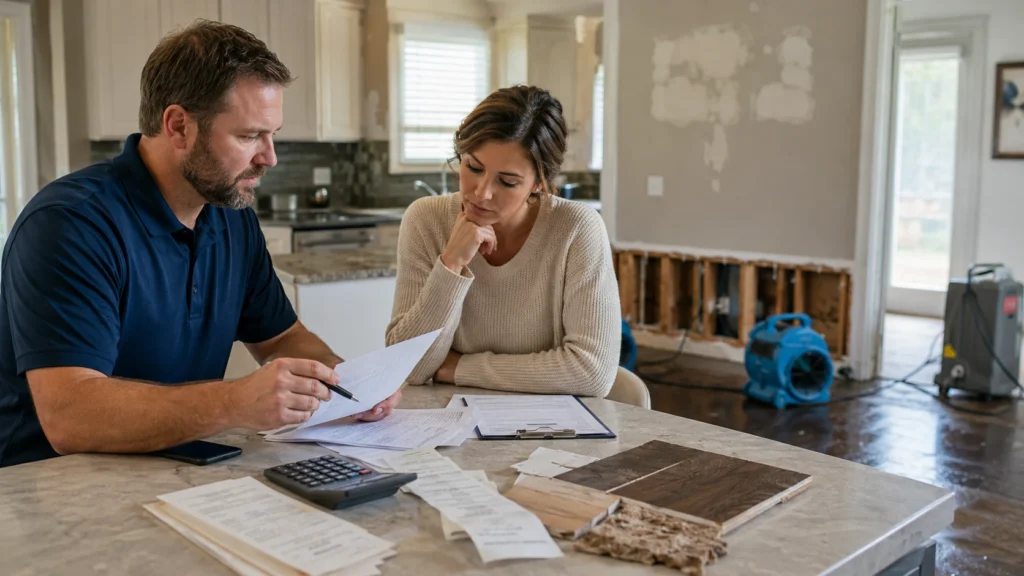
A burst pipe can turn an ordinary morning into a property emergency within minutes. Water may pour through a ceiling, spread beneath flooring, soak cabinets, and reach furniture before anyone finds the shutoff valve. For property owners handling Burst Pipe Insurance Claims Hutto, TX, the first decisions can affect both the condition of the building and the strength of the insurance claim. The damage is rarely limited to the place where the plumbing failed. Water moves through seams, insulation, wall cavities, flooring assemblies, and openings around electrical or mechanical components. A small split in a pressurized line can affect several rooms even when only one wet spot is immediately visible.
Move quickly. However, do not move so quickly that you erase the evidence. Your first priority is safety and stopping the water. Your second is preserving a clear record of what happened. Photographs, videos, plumbing reports, moisture readings, receipts, and a written timeline can help establish the cause, scope, and cost of the loss. Insurance coverage is not based only on the amount of water released. The carrier may also examine why the pipe failed, how long the water escaped, whether the plumbing showed prior deterioration, and whether the owner took reasonable steps to prevent additional damage after discovery.
That process can become frustrating. A contractor may recommend removing drywall and flooring, while the insurer’s estimate includes only drying and paint. A plumber may describe a sudden fitting failure, yet the carrier may question whether the leak developed gradually. Understanding How Insurance Companies Evaluate Hail Damage also reveals a broader claim principle: insurers often investigate cause, timing, physical evidence, maintenance history, and resulting damage before deciding what they will pay. Hutto properties include newer homes, established residences, rental units, offices, restaurants, and commercial buildings. Construction methods differ, but water behaves consistently. It follows gravity, pressure, openings, and absorbent materials until the source is stopped and the affected areas are properly dried. That is why visible damage should never be treated as the complete scope. A stained ceiling may indicate wet insulation above it. Buckled laminate may conceal saturated underlayment. A damp cabinet base may be connected to moisture behind the wall and beneath the finished floor.
The insurance company may send an adjuster, independent inspector, engineer, plumber, or mitigation vendor. Each professional may examine a different part of the loss. Therefore, property owners should maintain their own organized file instead of assuming every participant will share every photograph, reading, or conclusion. Good documentation does not require complicated equipment. Start with clear photographs, steady video, written notes, preserved materials, and copies of every report. Then add professional testing when the conditions justify it. Do not exaggerate the loss. Document it carefully. Accurate measurements, consistent descriptions, and clear photographs are more persuasive than broad statements such as “everything is ruined.” Water can spread through porous materials by capillary action, allowing moisture to move beyond the point where it first entered. That is one reason drywall, wood, carpet padding, insulation, concrete, and cabinet materials should be tested rather than judged only by appearance.
What Counts as a Burst Pipe?
A burst pipe is generally a plumbing line or connected component that cracks, splits, separates, or otherwise releases water unexpectedly. The failure may involve a pressurized supply line, drainpipe, appliance connector, water heater fitting, toilet line, sprinkler pipe, or plumbing fixture. Common failures include frozen supply lines, broken fittings, washing machine hoses, refrigerator lines, toilet connectors, water heater connections, cracked drains, separated joints, damaged outdoor plumbing, punctures during construction, and deteriorated valves.
Does Homeowners Insurance Cover a Burst Pipe?
Many property policies cover sudden and accidental water discharge from a plumbing system. However, coverage depends on the contract, endorsements, exclusions, occupancy status, deductible, and facts surrounding the loss. The failed pipe itself may be treated differently from the resulting water damage. An insurer might cover the removal and replacement of drywall needed to reach the pipe, along with damaged finishes, while excluding the cost of replacing a worn plumbing part.
When Coverage May Be Limited or Denied
Insurers often distinguish sudden discharge from repeated seepage or long-term leakage. A pipe that suddenly separates is different from a slow leak that has created staining, decay, corrosion, or microbial growth over an extended period. Read the insurer’s decision closely. A denial letter should identify the facts relied upon and the policy language applied. When the explanation is vague, request clarification in writing.
What to Do Immediately
Burst Pipe Insurance Claims Hutto, TX demand fast action, but safety comes first.
Shut Off the Water
Locate the main shutoff valve and stop the flow when it is safe. In many homes, the valve is near the water meter, garage, utility room, exterior wall, or point where the main line enters the building. Do not enter standing water when electrical equipment, outlets, appliances, or wiring may be energized. Contact emergency services, an electrician, or the utility provider when electrical hazards are present.
Protect People From Unsafe Areas
Keep occupants away from sagging ceilings. A water-filled ceiling can collapse with little warning. Move pets and children to a dry area. If the building cannot be occupied safely, arrange temporary lodging and notify the insurer.
Call a Licensed Plumber
Ask the plumber to identify and photograph the failed component before discarding it. Request a report describing the failure location, pipe type, observed damage, evidence of freezing or corrosion, repairs completed, and any recommended additional inspection. Whenever practical, preserve the damaged section of pipe. Place it in a labeled bag or container and record where and when it was removed.
Begin Emergency Mitigation
Standing water should be extracted promptly. Wet materials should be evaluated, and drying equipment may need to be installed. Mitigation is not the same as reconstruction. Its purpose is to stop further damage, remove water, control humidity, and stabilize the building. Do not authorize unnecessary demolition simply because a contractor says insurance will pay. Ask which materials are wet, how that was determined, and why removal is necessary.
Notify the Insurance Carrier
Report the event promptly and obtain a claim number. Provide known facts without guessing about the cause or coverage. A useful report might say that water was discovered at a specific time, the main supply was shut off, a licensed plumber identified a separated fitting, and certain rooms were affected. That is better than offering unsupported theories.
Document Before Cleanup Changes the Scene
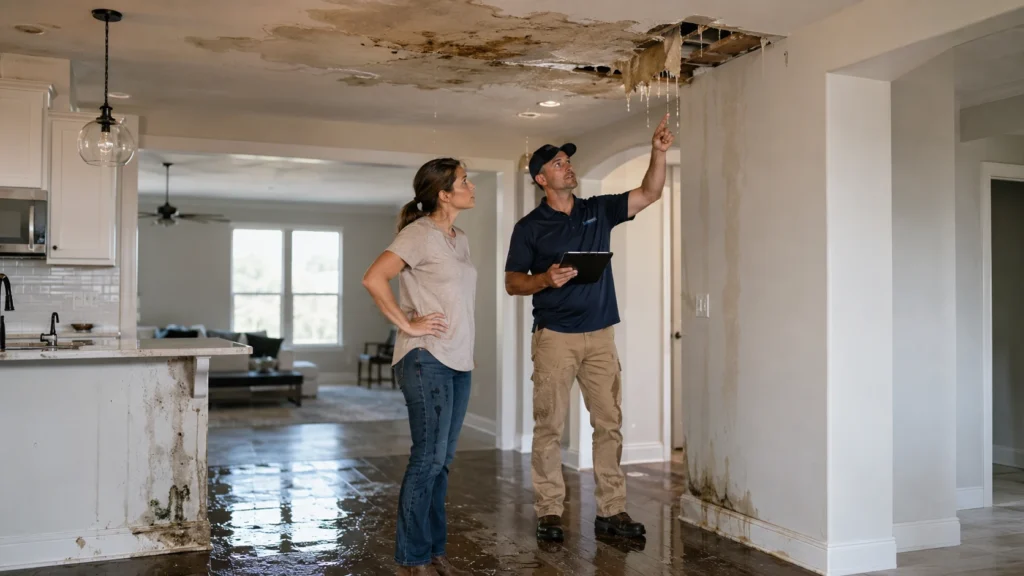
Photographs should begin before extraction, moving contents, or removing materials whenever safety allows. Take wide photographs from each doorway. Then capture medium views showing affected sections of the room. Finally, photograph individual materials and belongings closely.
Record the failed component, standing water, ceiling stains, wet walls, damaged flooring, swollen cabinets, affected furniture, water paths between rooms, mitigation equipment, removed materials, and conditions behind opened walls. Video can show relationships that still photographs miss. Walk slowly through the property while describing the location, date, visible conditions, and direction the water traveled. Keep narration factual. Say, “The carpet is wet from the doorway to the far wall,” rather than, “The entire subfloor must be replaced.”
Build a Written Timeline
Memories become less reliable as calls, inspections, and repairs accumulate. A timeline creates a consistent record.
| Event | Details to Record |
| Damage discovered | Date, time, and person who found it |
| Water shut off | Time and person who closed the valve |
| Plumber contacted | Company, technician, and arrival time |
| Cause identified | Failed component and location |
| Insurer notified | Date, claim number, and representative |
| Mitigation started | Contractor and work performed |
| Inspection completed | Names and findings |
| Materials removed | Type, quantity, and reason |
| Estimate received | Contractor, amount, and scope |
| Payment issued | Amount, category, and date |
Include missed appointments, requests for documents, inspection dates, and important calls. After a significant telephone conversation, send a short email confirming your understanding.
Track Hidden Water Migration
Water rarely stops at the visible edge of a stain. It may travel beneath flooring, through insulation, behind cabinets, along framing, and into adjoining rooms. Gravity pulls it downward, while absorbent materials draw it sideways. A moisture inspection may include meters, thermal imaging, humidity readings, temperature readings, moisture mapping, inspection openings, and daily drying logs.
Thermal imaging may identify temperature differences associated with moisture, but it does not prove a material is wet. Suspicious areas should be confirmed with suitable testing. Ask the mitigation contractor for the initial moisture map and daily readings. The report should identify what was tested, where it was tested, the readings obtained, and how those readings changed during drying.
Examine Each Building System
Walls and Ceilings
Drywall can absorb water beyond the visible stain. Wet insulation may remain trapped inside a cavity even after the surface feels dry. Inspect baseboards, corners, electrical openings, ceiling penetrations, and lower wall sections. Water may collect inside fixtures or travel through holes around plumbing and wiring.
Flooring
Floor damage can be deceptive. Hardwood may cup, crown, stain, or separate. Laminate can swell at the edges. Carpet padding may remain wet beneath dry-feeling fibers. Tile may conceal wet underlayment or lose adhesion after prolonged exposure. Document whether flooring continues into adjoining rooms without a natural stopping point. This may matter when discussing repair scope and material matching.
Prevent Additional Damage Without Destroying Evidence
Policies generally require owners to take reasonable steps to protect damaged property from further harm. That does not mean rebuilding immediately or discarding everything. Reasonable mitigation may include stopping the source, extracting water, moving dry contents, installing equipment, covering openings, separating wet items, preserving damaged components, and obtaining professional inspections.
Photograph materials before removal. Photograph the exposed area afterward. Keep representative samples when flooring, trim, cabinets, or other materials may need to be identified and matched. Do not repaint, reinstall drywall, replace flooring, or close cavities before the insurer has had a reasonable opportunity to inspect, unless emergency conditions require immediate work. When work cannot wait, document why.
Create a Room-by-Room Contents Inventory
Personal property losses are often underestimated because owners focus on furniture and electronics while overlooking clothing, linens, books, kitchenware, tools, food, and ordinary household supplies. Work systematically. Start at one wall and move around the room in a consistent direction.
| Inventory Detail | Example |
| Item | Three-seat fabric sofa |
| Brand | Manufacturer, when known |
| Age | Approximately four years |
| Original cost | Amount paid |
| Replacement cost | Current comparable price |
| Condition before loss | Clean and functional |
| Damage | Water saturation and staining |
| Evidence | Receipt, photograph, or bank record |
Proof may include receipts, bank statements, online orders, photographs, manuals, warranties, packaging, or statements from people familiar with the property. Do not label every wet item a total loss without support. Describe what happened. A qualified evaluator can determine whether cleaning, testing, repair, or replacement is appropriate.
Track Additional Living Expenses
A burst pipe may make a home temporarily unsafe or unsuitable for normal use. Depending on the policy, additional living expense coverage may help with increased costs while repairs are completed. Potential expenses include hotels, short-term rentals, increased meal costs, laundry, pet boarding, storage, extra transportation, furniture rental, and utility setup fees.
Save itemized receipts. Note why each expense was necessary and which occupants it supported. Coverage usually concerns the reasonable increase above normal household spending, not every expense during displacement. Continue tracking ordinary costs so the difference can be calculated. Ask the insurer about limits, approval procedures, and documentation requirements. Do not assume temporary housing will remain covered indefinitely.
Understand the Insurance Inspection
The insurer’s adjuster may photograph rooms, measure damaged areas, review the plumber’s report, inspect the failed component, and prepare an estimate. Attend when possible. Walk through every affected room and identify the source, visible damage, mitigation work, and areas requiring additional evaluation.
Have the plumbing report, photographs, videos, moisture maps, drying logs, contractor estimates, contents inventory, living expense receipts, invoices, and correspondence available. A brief inspection may miss concealed damage. If the adjuster does not inspect an area identified as wet, raise the issue in writing and provide supporting readings.
Why Estimates May Be Too Low
Insurance and contractor estimates often differ because they use different quantities, assumptions, labor operations, materials, or repair methods. Common omissions include insufficient drywall, missing insulation, incomplete paint preparation, no texture matching, omitted trim, inadequate flooring quantities, missing cabinet parts, no electrical evaluation, insufficient debris removal, missing permit costs, and incorrect room dimensions.
Compare estimates line by line. A higher contractor total does not automatically prove the insurer is wrong. A lower insurer estimate does not automatically prove the contractor is overcharging. The real question is whether each scope reflects the work required to return the property to its covered pre-loss condition.
Replacement Cost, Actual Cash Value, and Depreciation
Replacement cost value generally refers to the cost of repairing or replacing damaged property with materials of similar kind and quality, subject to the policy. Actual cash value generally reflects replacement cost less depreciation. Depreciation may consider age, condition, expected life, and other factors.
| Payment Stage | Description |
| Initial payment | Actual cash value after deductible |
| Supplemental payment | Additional approved damage |
| Depreciation payment | Recoverable amount after repairs |
| Final adjustment | Remaining approved costs |
Review where depreciation was applied and whether it is recoverable. Ask what documents are required to claim withheld amounts. Pay attention to deadlines. Some policies require repairs within a specified period before recoverable depreciation can be requested.
Common Mistakes That Weaken Claims
The biggest mistakes are often preventable. Do not clean so quickly that evidence disappears. Preserve the failed pipe, damaged materials, and representative samples when practical. Do not offer unsupported explanations. “The plumber found a separated fitting” is stronger than “The builder installed everything incorrectly.” Do not accept the first estimate without reviewing quantities, materials, labor, access work, and connected repairs.
Do not lose track of communications. Keep notes of calls and copies of emails, letters, reports, and estimates. Do not sign broad mitigation, reconstruction, storage, or direction-to-pay agreements without understanding your financial responsibility. Finally, do not ignore deadlines for proof of loss, repairs, depreciation recovery, supplements, appraisal, or legal action.
When a Public Adjuster May Help
For Burst Pipe Insurance Claims Hutto, TX, disputes may involve extensive demolition, hidden moisture, disputed causes, low estimates, business losses, or complicated policy provisions. A public adjuster represents the policyholder in preparing and presenting the property claim. Services may include policy review, inspections, estimates, contents documentation, mitigation review, carrier communication, supplemental submissions, and payment tracking.
A public adjuster does not determine coverage or guarantee a result. However, detailed documentation can make disagreements easier to identify and address. Owners considering help with Burst Pipe Insurance Claims Hutto, TX should verify licensing, experience, fees, contract terms, and the specific services offered before signing.
What to Do When the Claim Is Underpaid
Compare the insurer’s estimate with the plumber’s findings, moisture documentation, and contractor scope. Identify precise differences. Perhaps the insurer included forty square feet of drywall while documented moisture supports one hundred twenty. Maybe flooring removal is listed but underlayment is missing. Perhaps cabinets are listed for cleaning even though the base material is swollen.
Submit photographs, measurements, reports, and estimates supporting each correction. Ask the insurer to respond to disputed items in writing. Newly discovered damage should be reported promptly. Photograph it before repairs continue and explain when and how it was found.
What to Do When the Claim Is Denied
Request the complete denial in writing. The letter should explain the insurer’s factual conclusions and identify the policy provisions supporting the decision. Then compare the denial with the evidence. Was the decision based on long-term leakage even though the plumber documented a sudden separation? Did the inspector overlook the failed component? Was the property described as vacant when it was occupied?
Correct factual errors with records, not frustration. Submit plumbing reports, photographs, maintenance records, occupancy evidence, utility records, mitigation logs, and other relevant materials. Depending on the dispute, a policyholder may consider internal review, appraisal, mediation, a regulatory complaint, professional claim assistance, or legal advice.
Burst Pipe Claim Checklist
Keep the policy, declarations page, claim number, photographs, videos, failed component, plumbing report, mitigation contract, moisture maps, drying logs, demolition photographs, contractor estimates, material samples, contents inventory, receipts, income records, correspondence, payment summaries, depreciation calculations, and permit documents. Create digital backups. Use descriptive file names such as “Upstairs Bathroom Ceiling Before Demolition” instead of leaving hundreds of images with automatic camera numbers.
Preventing Another Pipe Failure
Not every plumbing failure can be prevented. Still, practical precautions can reduce risk and limit the severity of future losses. Insulate exposed pipes, maintain reasonable indoor temperatures, disconnect exterior hoses, seal openings, replace deteriorated appliance connectors, monitor water pressure, inspect older systems, install leak sensors, and consider an automatic shutoff device.
Leak sensors are useful near water heaters, washing machines, sinks, toilets, refrigerators, and mechanical rooms. Automatic shutoff systems may stop the supply when unusual flow is detected. Technology helps. Preparation matters more. Every adult occupant should know where the main shutoff is located and how to use it. That simple knowledge can turn a major water loss into a more manageable repair.
Build the Claim Around Evidence
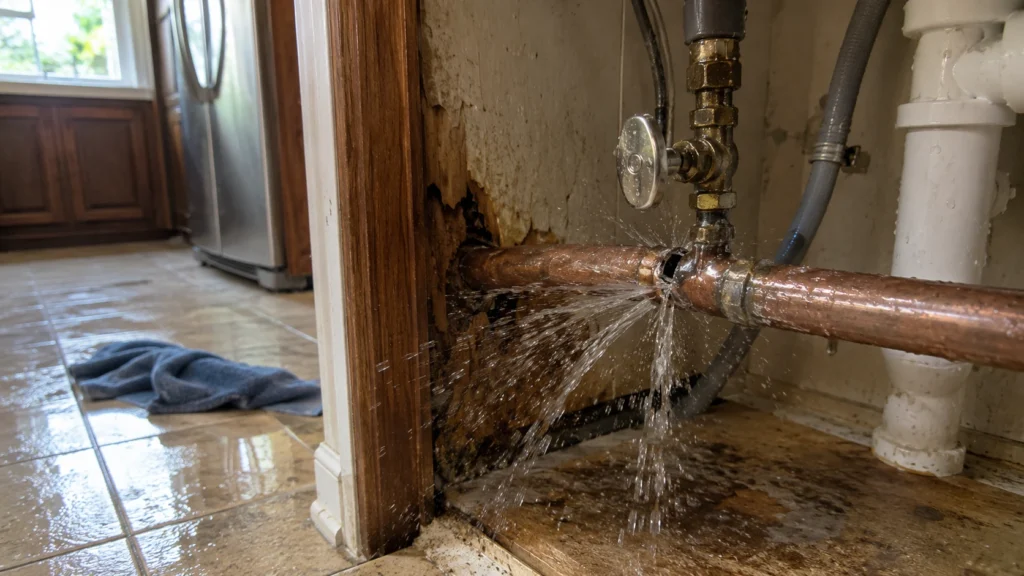
Burst Pipe Insurance Claims Hutto, TX are not only about the failed plumbing component. They concern the water’s full path through the property, the materials affected, the steps taken to limit further damage, and the cost of reasonable repairs. Act quickly, but preserve the scene. Stop the water, call qualified professionals, document each room, request detailed reports, track expenses, and compare estimates carefully.
Most importantly, do not let visible damage define the full scope. Water may remain beneath flooring, behind cabinets, above ceilings, or inside walls long after the surface appears dry. Strong Burst Pipe Insurance Claims Hutto, TX are built with facts: clear photographs, reliable moisture readings, itemized estimates, professional findings, and organized communication. For homeowners and businesses in Hutto, preparation can prevent a stressful water loss from becoming an even more difficult insurance dispute. Build the record early, protect the evidence, and tie every repair request to documented conditions and policy terms.
FAQs
Many policies cover sudden and accidental water discharge, including resulting damage to walls, flooring, ceilings, and belongings. Coverage depends on the cause and specific policy terms.
Insurance may cover access and resulting water damage while excluding the worn or failed plumbing component itself. Review the estimate and policy carefully.
Shut off the main water supply, avoid electrical hazards, photograph the damage, contact a licensed plumber, and notify your insurer promptly.
You should remove standing water and prevent further damage, but document everything before cleanup. Preserve the failed pipe and photograph materials before removal.
A claim may be questioned if reasonable heat was not maintained or the property was vacant. However, coverage depends on the policy and precautions taken.
Obtain a detailed plumbing report, photographs of the failed component, witness statements, and records showing when the damage was discovered.
Inspect wall cavities, insulation, subflooring, cabinets, electrical components, ceilings, and adjoining rooms. Moisture meters and professional testing can reveal damage that is not visible.
Keep records of plumbing, mitigation, temporary housing, meals, storage, transportation, repairs, and damaged personal property. Save itemized receipts and invoices.
Compare it line by line with contractor estimates, moisture reports, photographs, and measurements. Submit a documented supplement for missing or undervalued repairs.
A public adjuster may help when the damage is extensive, the estimate is incomplete, coverage is disputed, or the claim includes hidden damage and business losses.